Most businesses know they should be posting on social media. Very few know what to post, or why. The result is a feed full of product shots, opening-hours reminders, and the occasional bank holiday graphic: content that exists but does not communicate.
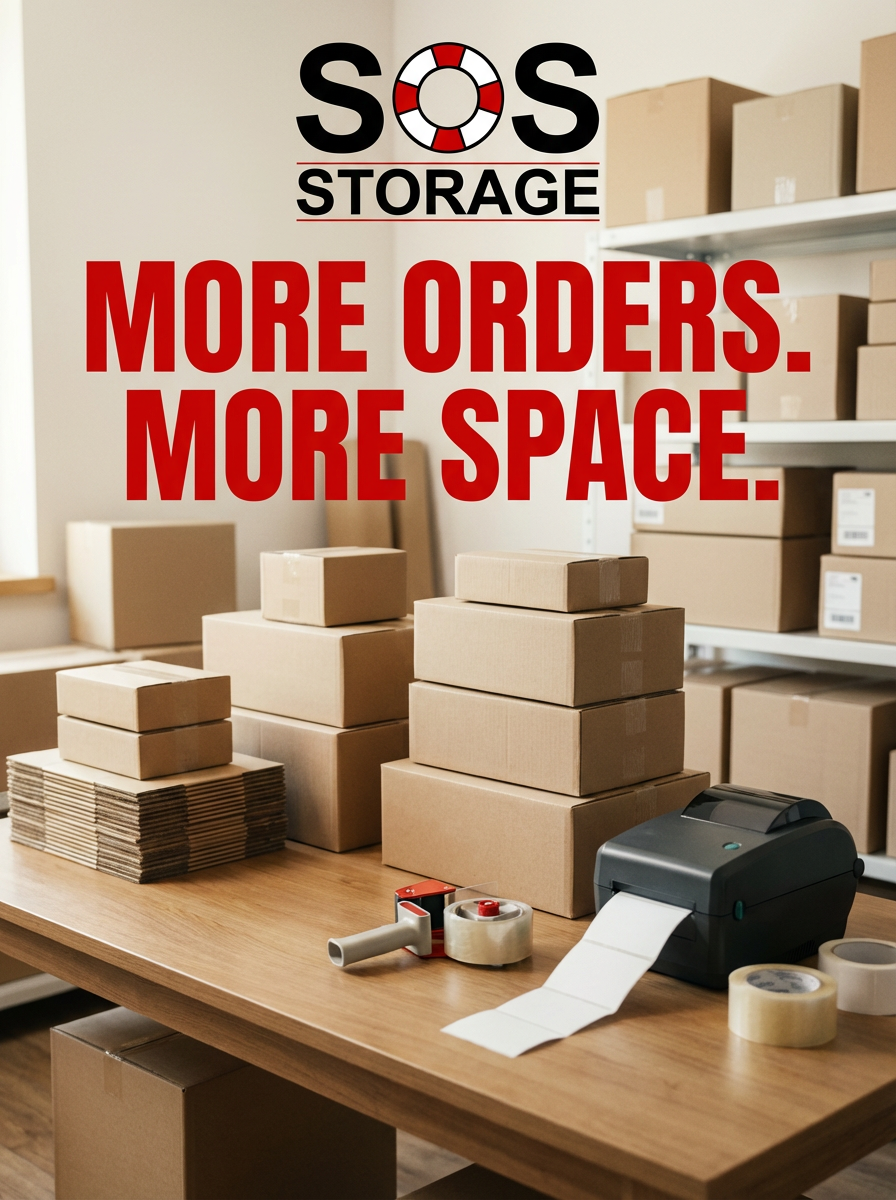
When SOS Storage came to us, the brief was familiar: they had the presence, they had the product, and they had the nagging sense that their social channels were not doing enough work. They were not wrong.
The Difference Between Posting and Communicating
Posting is easy. You pick a photo, write something vague about your service, and hit publish. Communicating is harder. It requires you to understand who you are talking to, what moment in their life they are in, and why they should stop scrolling long enough to register your message.
For a storage company, the instinct is to lead with the product: units, prices, availability. The problem is nobody wakes up thinking about storage. They wake up thinking about the move they are dreading, the spare room that has become a dumping ground, or the growing stack of stock parcels that their home office can no longer absorb.
Building a Content System Around Real Scenarios
The approach we took with SOS Storage was to map out the real-life moments that lead someone to need storage, and then build content around those moments rather than the product itself.
Moving house between properties is an obvious one. So is the desire to declutter a home without committing to throwing everything away. But the brief got more interesting when we looked at shifting work and lifestyle patterns: people running e-commerce businesses from home who have outgrown their spare room, remote workers relocating without a permanent base, and the general life admin chaos that accumulates when you are between one chapter and the next.
Same core message (SOS Storage has space when you need it), but expressed through a different scenario each time. The product becomes the solution to a problem the audience already recognises, rather than a thing they need to be persuaded they want.
Why Consistency Matters as Much as Creativity
Content ideas are only part of the work. The other part is making sure that when someone scrolls past one of your posts for the third time, it feels familiar. Recognition builds trust, and trust builds the kind of low-friction decision-making that means someone messages you when the moment arrives.
For SOS Storage, that meant clean and consistent visuals with a clear visual identity: a look that felt connected across every post, regardless of which scenario it was addressing. The audience may not consciously notice the consistency, but they feel it. It is the difference between a brand that looks like it knows what it is doing and one that looks like it is making it up week to week.
The Hook Is Not the Gimmick: It Is the Entry Point
A lot of social media advice obsesses over hooks as if they are a copywriting trick. They are not. A genuine hook works because it names something the audience is already experiencing. "Moving between homes?" is not clever wordplay; it is a direct reference to a real situation that a specific person is in right now.
When your hook is grounded in an actual human scenario rather than a product feature, it does two things at once: it filters for the right audience and it earns attention from them immediately. That is not manipulation; it is relevance.
What This Looks Like in Practice
For any business considering this approach, the starting point is not a content calendar. It is a list of moments. Ask yourself: at what point in someone's life do they actually need what we offer? What are they worried about in that moment? What are they trying to avoid or solve?
Once you have those moments, the content almost writes itself, because you are reporting on real life rather than inventing marketing speak. The calendar comes later, once you have a system that makes sense.
This is the kind of work that looks simple on the surface but requires a clear strategic eye to get right. If your social channels are busy but not producing results, the problem is rarely effort; it is usually direction.
If you are looking to build a content strategy that actually connects with the right people, take a look at how we work with brands across our services, or book a call with us and we can talk through where to start.