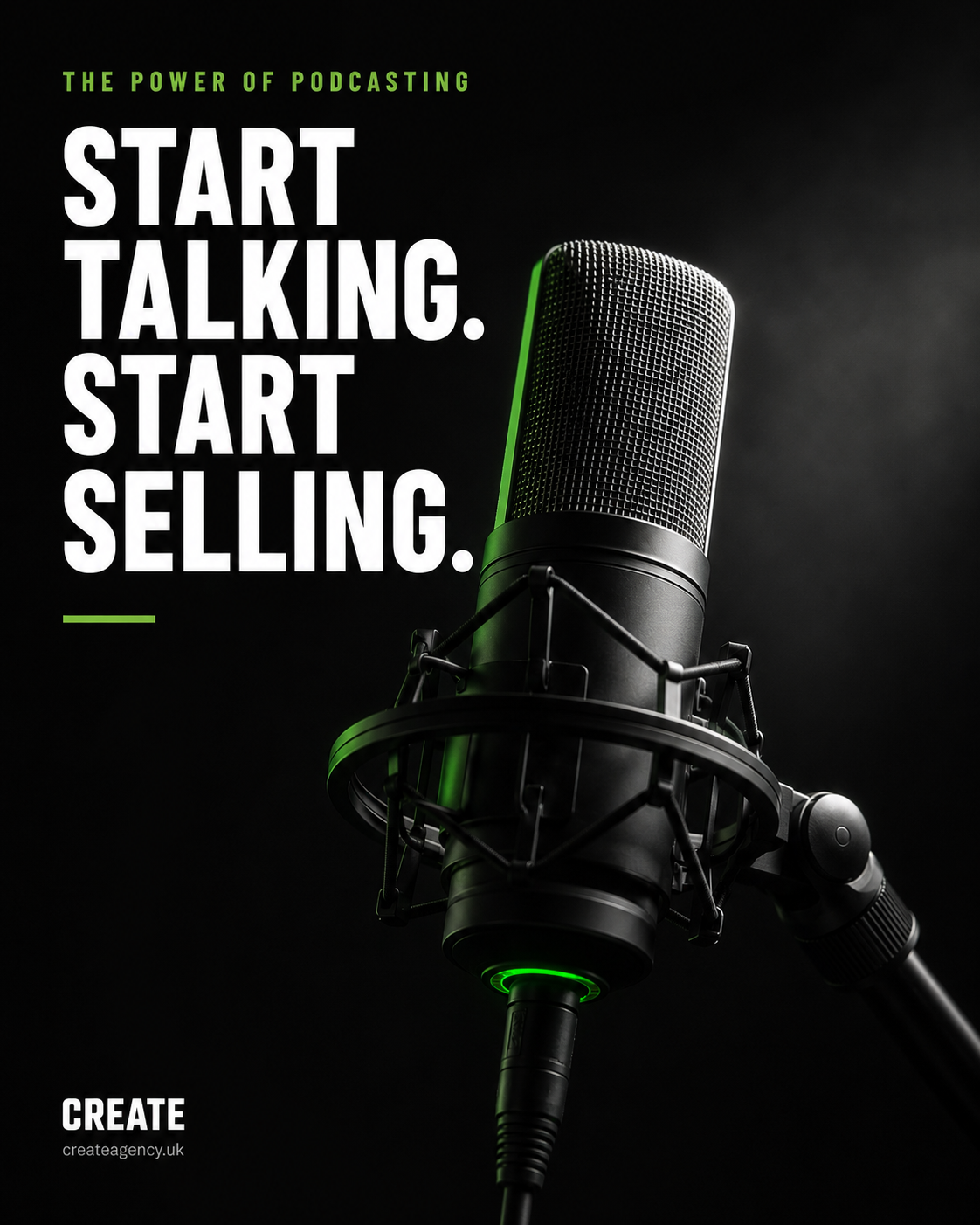
Most marketing fights for fractured attention. Display ads get ignored. Social posts disappear in seconds. Email open rates inch downward year on year. Podcasting does something almost none of these channels manage: it holds an audience for twenty, thirty, sometimes sixty minutes at a stretch, with no algorithm deciding halfway through that something else might be more interesting.
That sustained attention is genuinely rare, and businesses that understand its value are building authority in ways their competitors are not. We have watched podcasting grow from a niche hobby into a legitimate commercial channel, and the organisations treating it seriously are reaping the rewards.
The Problem With Most Digital Channels Right Now
Skip rates, scroll depth, bounce rates: modern analytics are essentially a dashboard of how quickly people leave. Every platform is competing for the same eyeballs, and the signal-to-noise ratio gets worse each year. Even well-crafted content can vanish without trace if the timing is off or the algorithm is indifferent.
Podcasts sit outside that arms race. A listener who presses play on a thirty-minute episode has already made a conscious decision to spend time with that content. They are not accidentally scrolling past it. They chose it, often while commuting, exercising, or doing something that makes other screens impossible. That context matters enormously.
Guesting vs Hosting: Two Different Strategies
There are two routes into podcasting as a business, and they serve different goals.
Guesting on established shows is the faster option for building immediate reach. Someone else has already done the hard work of growing an audience. A well-placed appearance on a relevant show (one where the listeners are actually your prospective clients or partners) can do more for your credibility in forty minutes than a month of LinkedIn posts.
Launching your own show is a longer game. It takes consistent effort to build an audience from scratch, and most podcasts fail simply because people underestimate that commitment. But for businesses with something genuine to say, a well-produced show becomes a compounding asset. Episodes from two years ago still get found, still get played, still generate enquiries.
Neither approach is inherently better. The right choice depends on how much time you have, what your goals are, and whether you already have an audience to bring to a new show.
What Podcasting Actually Does for Authority
Authority in a professional context is built through demonstrated knowledge and consistent visibility. Podcasting accelerates both in a specific way: the conversational format lets expertise emerge naturally, without the artificiality of a polished blog post or the brevity of a social caption.
Listeners form a genuine connection with voices they hear regularly. It is one of the few marketing formats where the personal and the professional overlap in a way that actually works in the brand's favour. A founder who speaks clearly, thinks on their feet, and holds interesting opinions becomes far more memorable than a company that just publishes press releases.
This applies across sectors. Professional services firms, manufacturers, retailers, and technology businesses have all used podcasting effectively. The format does not belong to any particular industry.
The Practical Barrier Is Lower Than It Looks
The usual reason businesses hesitate is production. Recording, editing, mixing, writing show notes, publishing to directories; it sounds like a project that requires a dedicated team.
In practice, a usable setup can be put together for a few hundred pounds. Remote recording tools have improved substantially, which means guests and hosts no longer need to be in the same room or even the same country. A decent microphone, a quiet space, and a clear point of view will take you further than expensive studio time with nothing interesting to say.
The businesses that struggle with podcasting usually have the opposite problem: they over-invest in production and under-invest in content. A beautifully mixed episode with nothing worth listening to will still fail.
When to Start, and What to Do First
The most common mistake is prolonged planning. Businesses spend months refining a format, a name, cover artwork: everything except actually recording anything. The first few episodes of any podcast are rarely the best ones. The format improves through practice, not preparation.
A better approach: identify two or three conversations worth having, record them, listen back critically, and decide from there whether the format suits your business and your voice. Treat the early episodes as a working prototype rather than a finished product.
If guesting appeals first, spend time identifying relevant shows in your sector and reaching out with a specific angle, not a generic offer to appear, but a genuine reason why their audience would benefit from the conversation.
If you are weighing up how podcasting might fit into a broader content or brand strategy, our services page covers the range of ways we help businesses build authority through the right mix of channels.