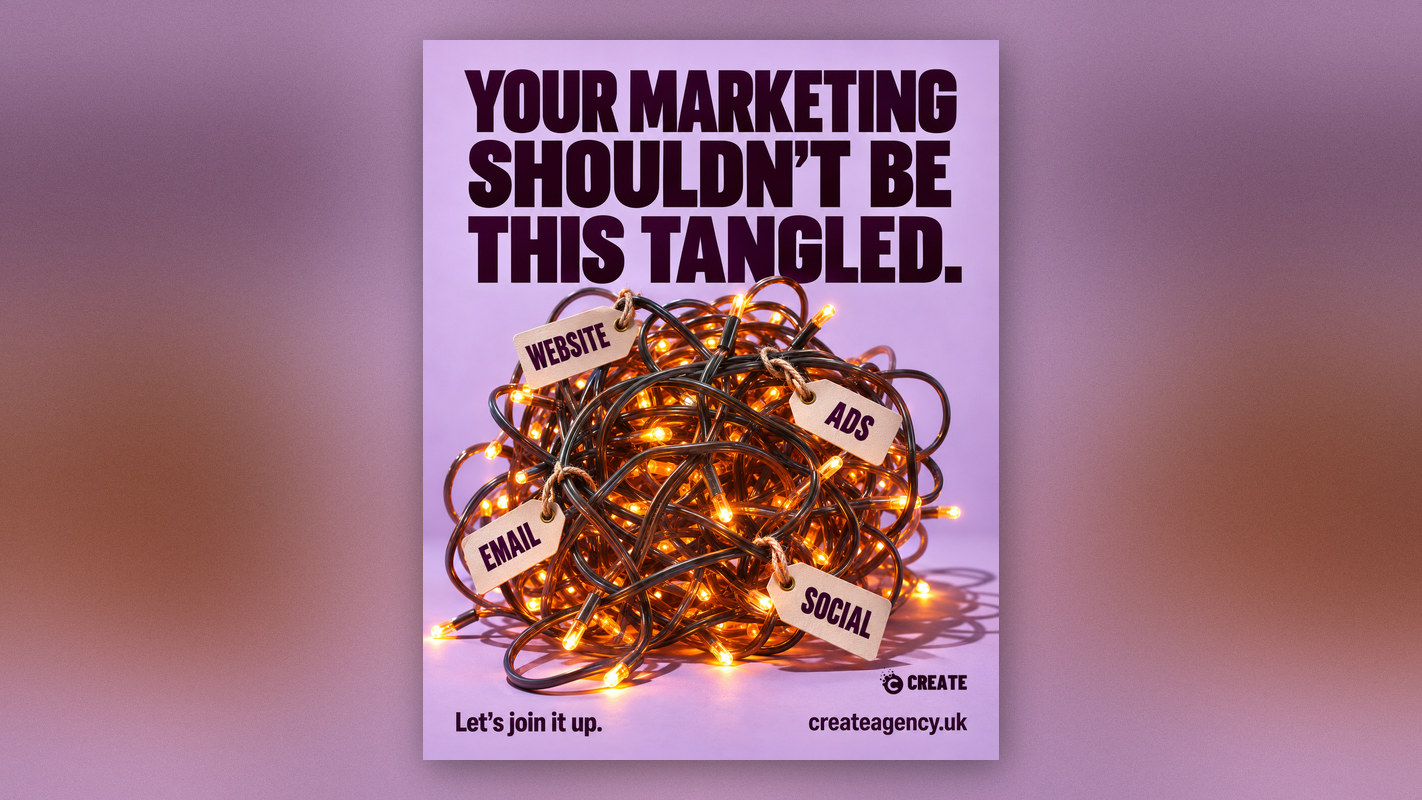
Your ad promises one thing. The website talks about something else. The follow-up email sends people back to the homepage. Each piece made sense when it was written, usually by different people at different times. Together, they leave the customer to do the joining up, and many won't bother.
Why campaigns get tangled
Most small business marketing grows in layers. The website was built a few years ago. The ads were set up last spring. The email platform came with a template, and somebody wrote a welcome message once and never looked at it again. Nobody sat down and followed a customer from the first click to the final enquiry, so nobody noticed the joins.
The fix isn't more marketing. It is one offer, carried clearly through every step.
One offer, from first click to enquiry
A joined-up campaign has three parts that agree with each other:
- The ad makes one specific promise to one type of customer.
- The landing page repeats that promise in the first thing a visitor sees, explains it, and gives one obvious way to act on it.
- The follow-up picks up exactly where the page left off: it confirms what the customer asked for, says what happens next and when, and gives them a reason to reply.
If any part changes the subject, the customer has to work out whether they are still in the right place. Most won't.
An illustrative example
This is a made-up business, to show the idea. It is not a client.
A garden design firm runs an ad in November: "Plan your spring garden now. Free design consultations booked for January." Here is the tangled version:
- The ad links to the homepage, which leads with a gallery of patios and says nothing about January consultations.
- The contact form asks "How can we help?" with no mention of the offer.
- The automatic email says "Thanks for your message, we'll be in touch", and nothing else.
And the joined-up version:
- The ad links to a page headed "Book a January design consultation", with three lines on what the consultation covers, who it suits and how long it takes.
- The form asks for the two or three things the designer needs to prepare, plus a preferred week in January.
- The follow-up email confirms the request, says when someone will reply with a date, and suggests three photos of the garden to send in advance.
The offer is the same from the ad to the inbox. The customer never has to wonder whether they are in the right place.
A ten-minute check for your own campaign
Pick one live campaign and do this on your phone:
- Click the actual ad or post, not your homepage. Where do you land?
- Read the first screen. Does it say what the ad said, in similar words?
- Find the next step. Is there one clear action, or several competing ones?
- Fill in the form or make the enquiry as a customer would. Is anything asked that the offer didn't prepare you for?
- Read what arrives afterwards. Does the email or message continue the same offer, and say what happens next?
- Note the first point where you paused, scrolled back or wondered what was going on.
That first pause is where to start. Fix it, then run the check again.
What usually needs changing
In our experience, the fixes are rarely dramatic. A dedicated page instead of the homepage. A headline rewritten to match the ad. A form trimmed to the questions that matter. A follow-up email that says something specific. Small changes, made in the right places, so each step leads naturally to the next.
Your takeaway
Follow one campaign from first click to final enquiry, on your phone, and note where the offer changes or the next step goes missing. That is your list of joins to fix, in order.
Want us to join it up?
If your marketing has grown into a collection of bits that don't quite connect, talk to CREATE. Send us the link to one campaign, and we'll tell you where we would start untangling it.