Nobody loses sleep over a website that looks fine. That is precisely the problem. The sites that cause the most damage are rarely the ones that look broken; they are the ones that look perfectly normal while quietly getting things wrong in the background.
We have seen all five of the faults below on real sites belonging to real businesses. None of them involved a hack, a crash, or anything dramatic enough to trigger an alert. Each one just sat there, working badly, for months or years, while the front end carried on looking presentable.
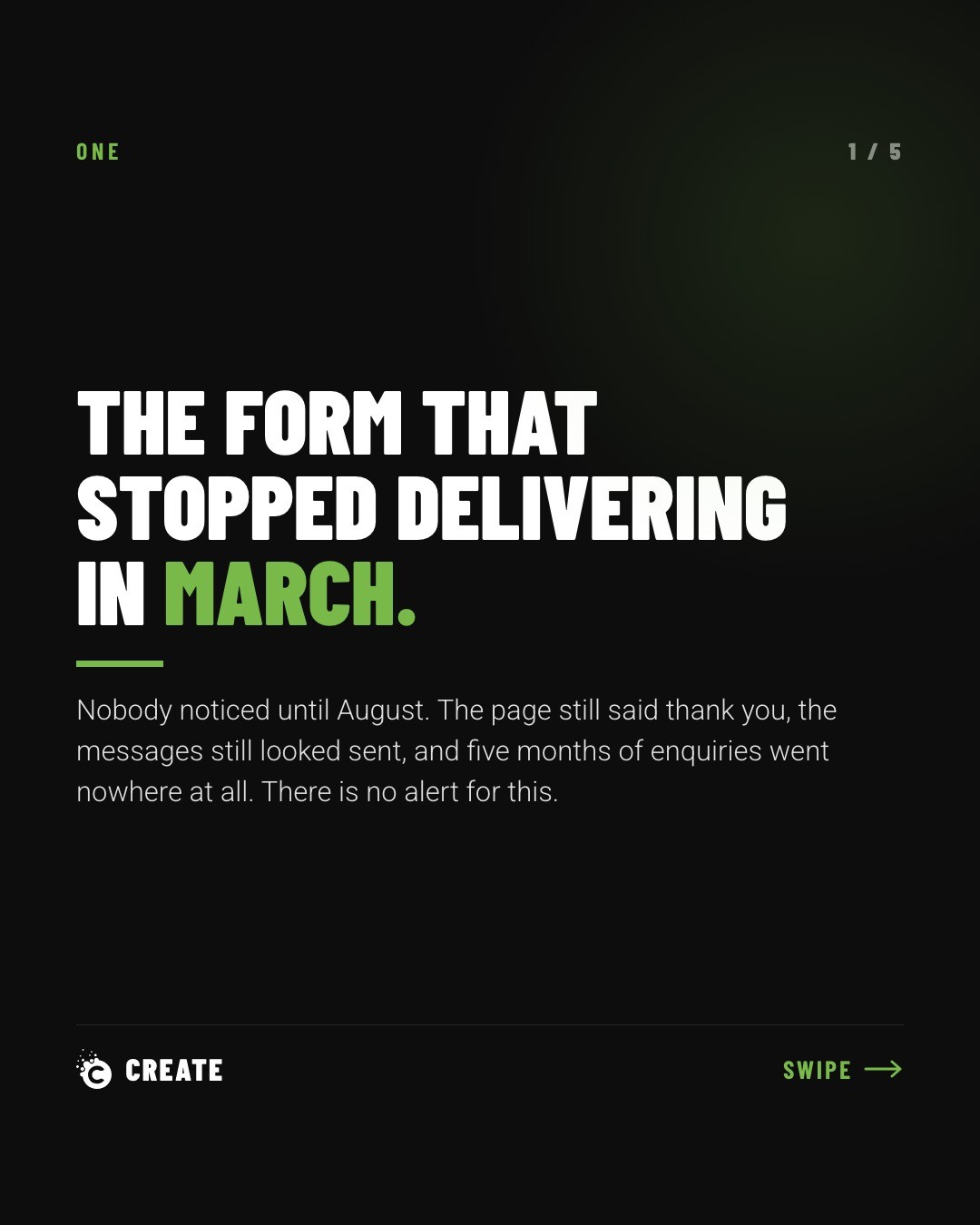
The Contact Form That Stopped Working in March
A contact form broke in March. Nobody noticed until August. The page still displayed its "thank you for your enquiry" message after every submission, so visitors had no reason to think anything was wrong. The business had no reason to think anything was wrong either, because nothing looked wrong.
Five months of enquiries went into a server somewhere and never arrived. Nobody rang to chase, because nobody on the customer side knew there was anything to chase. They just assumed the business hadn't got back to them and went elsewhere.
This is the most common fault we come across, and the simplest to prevent. Contact forms need testing on a schedule, not just when they're first built. A monthly test submission takes two minutes. Five months of silent failure takes a lot longer to recover from, if it's even noticed at all.
The Phone Number That Was Wrong in One Place Nobody Checks
The number on the website was correct. The number on Google Business Profile was correct. The number sitting on a directory listing nobody had looked at since it was created, years earlier, was wrong, and it was quietly sending callers to someone else's phone.
Business information doesn't live in one place any more. It's scattered across directories, aggregators, review sites, and old listings that were set up once and never revisited. Checking the obvious places isn't enough, because the obvious places are rarely the ones causing the problem.
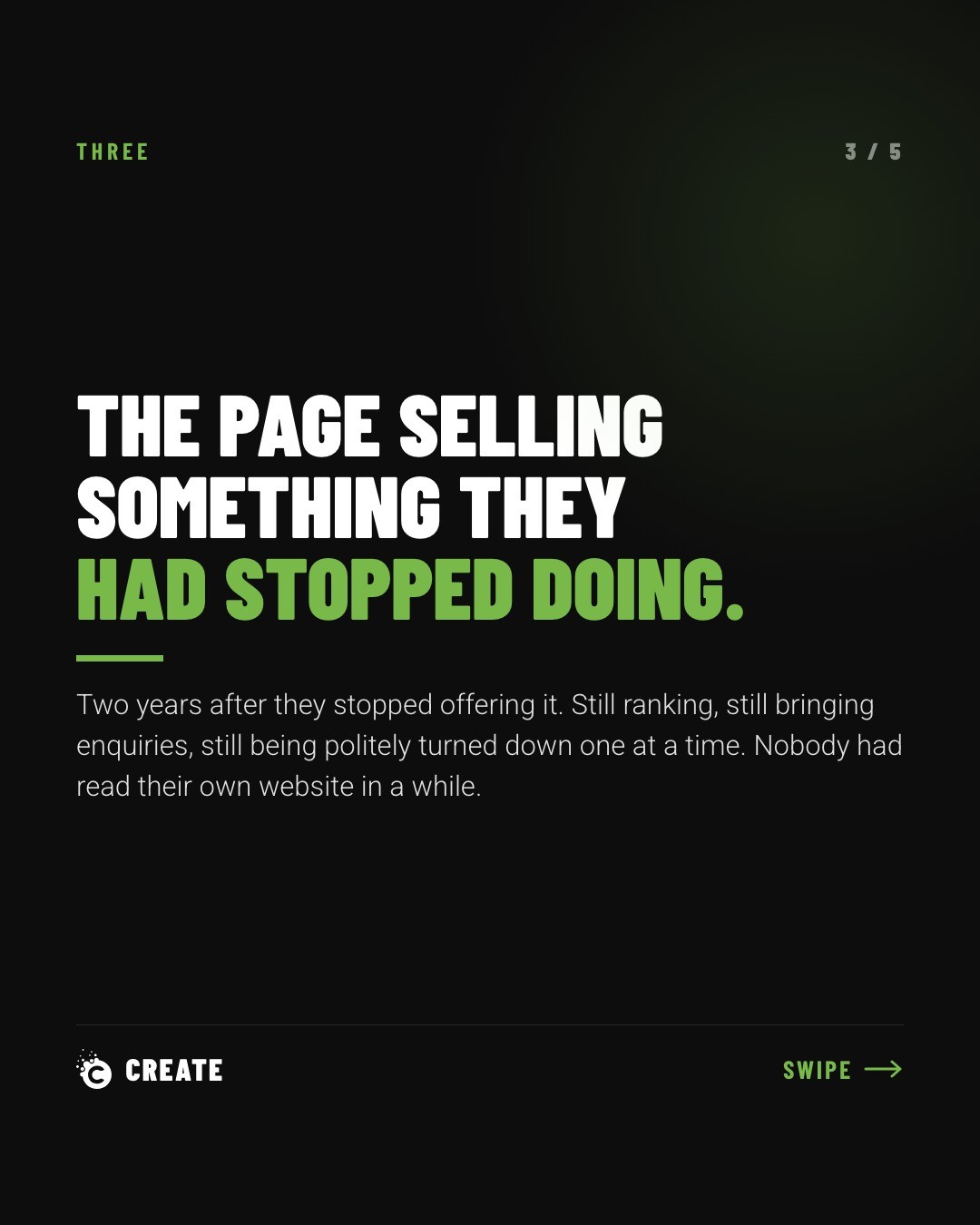
The Service Page Still Selling Something That Stopped Two Years Ago
A page kept ranking, kept bringing in enquiries, and kept describing a service the business had stopped offering two years before. Every enquiry had to be turned down individually, which is awkward for the business and frustrating for the person on the other end who found exactly what they searched for, only to be told it doesn't exist any more.
Old content doesn't quietly disappear from search results just because the service has stopped. Google doesn't know the business moved on unless someone tells it, by updating or removing the page. Until then, it keeps doing its job: ranking well, and sending people somewhere they shouldn't be going.
Prices From 2019, Still Published, Still Being Honoured
A customer can screenshot a published price. They can print it. They can turn up with it on their phone and ask why they're being charged more than the website says. A business has very little room to argue with its own published figures, even if those figures are six years out of date and were never meant to still be live.
Pricing pages get built once, early on, and then forgotten in the general churn of running a business. Nobody owns the job of revisiting them. Meanwhile the number sits there, in writing, on the business's own domain, available to anyone who wants to hold them to it.
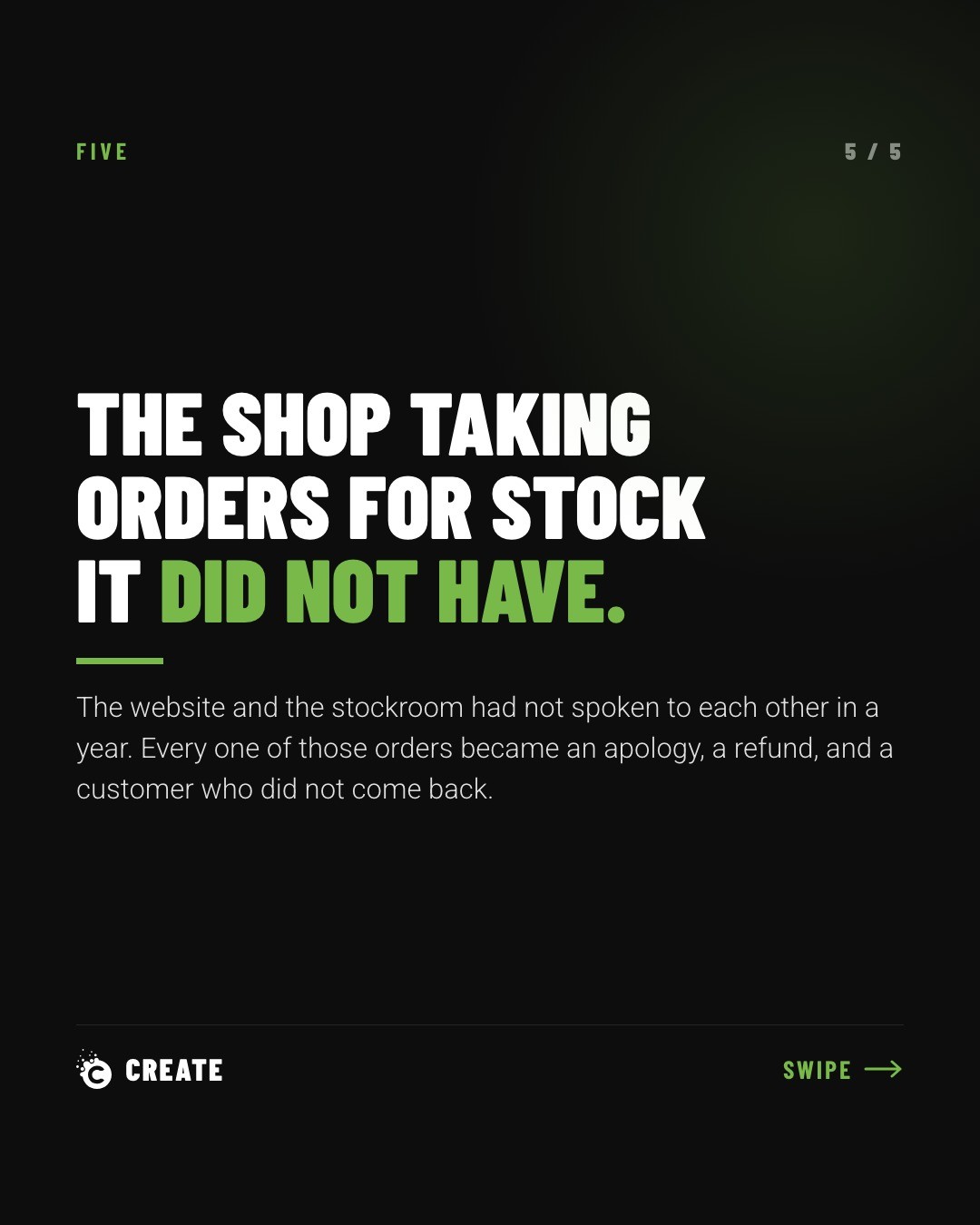
The Shop Selling Stock It Didn't Have
A website kept taking orders for a product the stockroom had not held for a year. The website and the stockroom had simply never been introduced to each other. Orders came in, payments were taken, and someone then had to explain, after the fact, that the item wasn't available and never had been.
This is what happens when an online shop is treated as a one-off build rather than a system that needs to stay connected to the reality of the business. Stock levels, pricing, and service lists all drift out of sync with what's actually true unless something is actively keeping them aligned.
The Moral Is in the Boring Bits
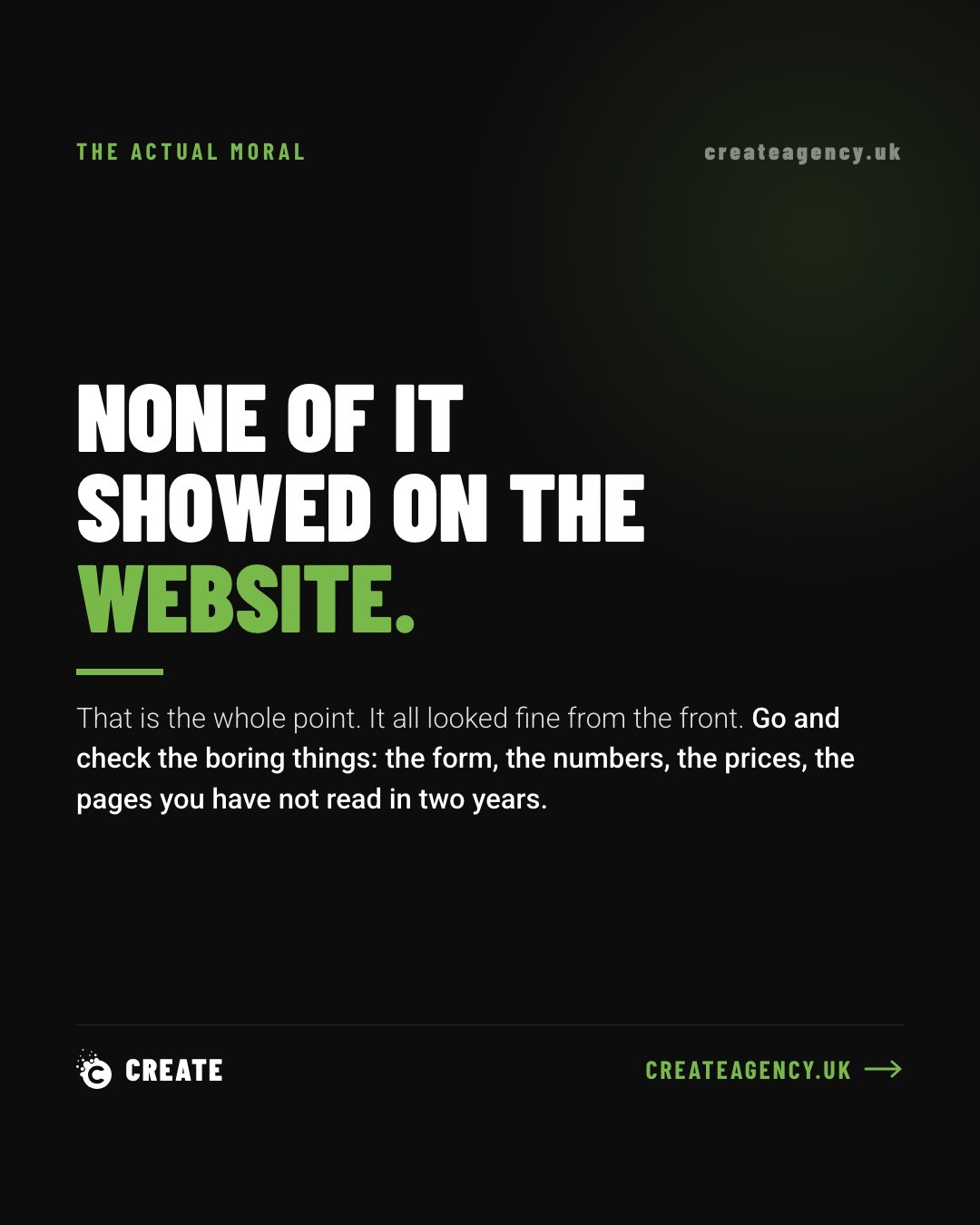
Every one of these faults looked completely fine from the front of the site. That's what makes them expensive: nothing ever flagged them as a problem. No error message, no broken layout, no obvious sign that anything needed attention.
The fix isn't more design polish. It's a proper audit of the unglamorous parts: form delivery, listed contact details, live service pages, published pricing, and whether the website actually reflects what the business can deliver today. These checks take an afternoon. The alternative is finding out five months, two years, or a lifetime of stock discrepancies too late.
If it's been a while since anyone checked the boring things on a website, that's worth putting right before it costs more than an afternoon would. We carry out exactly this kind of audit for clients regularly; if it's overdue, book a call and we'll take a proper look.