We hear this most months, usually from a business owner who is doing well. The enquiries come through Instagram or Facebook messages, the posts get engagement, and somebody on the team asks the obvious question: what do we actually need a website for.
It is a fair question. Social media clearly works for them, so the instinct to not spend money on something that seems to duplicate the job is reasonable. But there are three honest answers to why a website still matters, and none of them are about chasing trends.
Attention and Trust Are Different Jobs
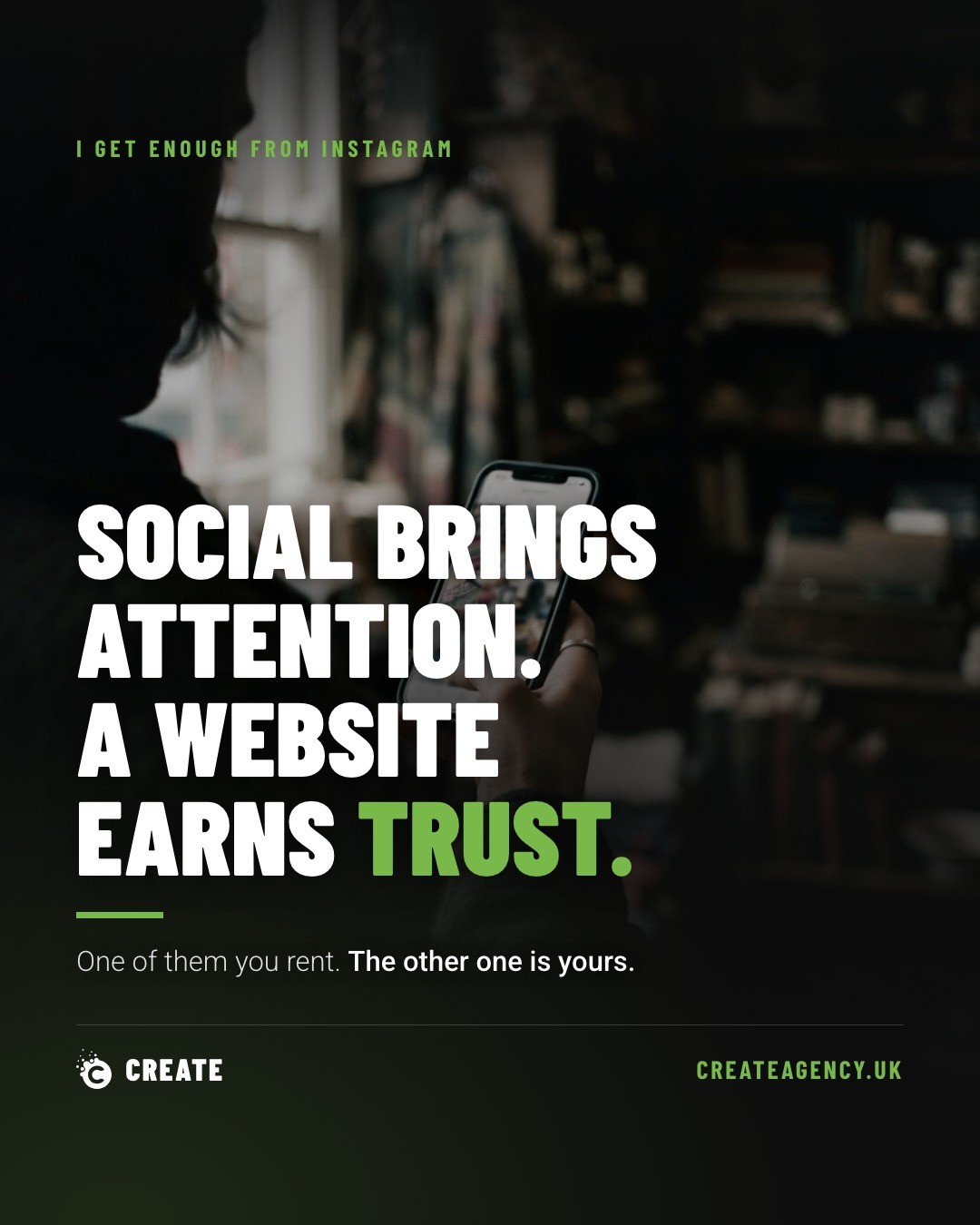
Social media is built for noticing. The scroll, the algorithm, the short video, all of it exists to interrupt someone for three seconds and make them stop. It is genuinely good at that job.
It is far weaker at answering the questions people ask ten minutes later, in a different order, in their own time. Does this business do the thing I need. What does it cost. Where are they based. Can I see more examples of their work. A website answers these at the reader's pace, not the algorithm's. A social feed, scrolled backwards through months of posts, cannot.
The Google Search Happens Whether You Like It or Not
Most people check before they buy, and this is not a new behaviour, it is just one that has become invisible because it happens on a phone in someone's pocket. They see a post, they like the look of the business, and before they message or call, they type the business name into Google.
What they find at that point decides a lot. A search that returns a grid of photos and nothing else leaves a gap, and people fill gaps with doubt. No website, no clear service pages, no sense of who is actually behind the account. That is a decision being made quietly, and it is usually being made against the business, not for it.
This matters more for certain sectors than others. Trades, professional services, anything where trust and credibility do the heavy lifting before someone parts with money, a bare social profile without a website behind it looks unfinished. It raises a question nobody says out loud: if this is a proper business, why can't I find anything about it.
You Do Not Own the Audience You Have Built
This is the answer that tends to land hardest, because it is the one business owners have not usually thought through. Every follower, every like, every bit of reach on a social platform exists on land owned by somebody else.
The account can be restricted. The reach can halve overnight because of an algorithm change nobody announced. A business can lose access entirely over a rule it never read, and have no conversation to have with anyone about it. We have watched businesses lose an audience built over four years, in an afternoon, through no fault of their own beyond building on rented ground.
A website does not have this problem. It is not subject to someone else's terms of service, someone else's algorithm, or someone else's business decisions about what gets shown to whom. It is the one digital asset a business actually owns outright.
Social and a Website Are Not Competing, They Are Different Tools
None of this is an argument against social media. Keep posting. It clearly works for getting noticed, building familiarity, and generating the first spark of interest that leads to an enquiry.
The argument is for having something underneath that first spark that belongs to the business. A website does not need to be enormous or expensive to do its job. It needs to answer the questions people ask after the post, confirm what turns up in a Google search, and exist independently of whatever a platform decides to do next.
We have built over 500 websites for businesses in exactly this position: doing well on social, getting enquiries, and realising there is a gap underneath it all that needed filling before it cost them something. If that sounds familiar, it is worth a conversation, and the easiest way to start one is to book a call.