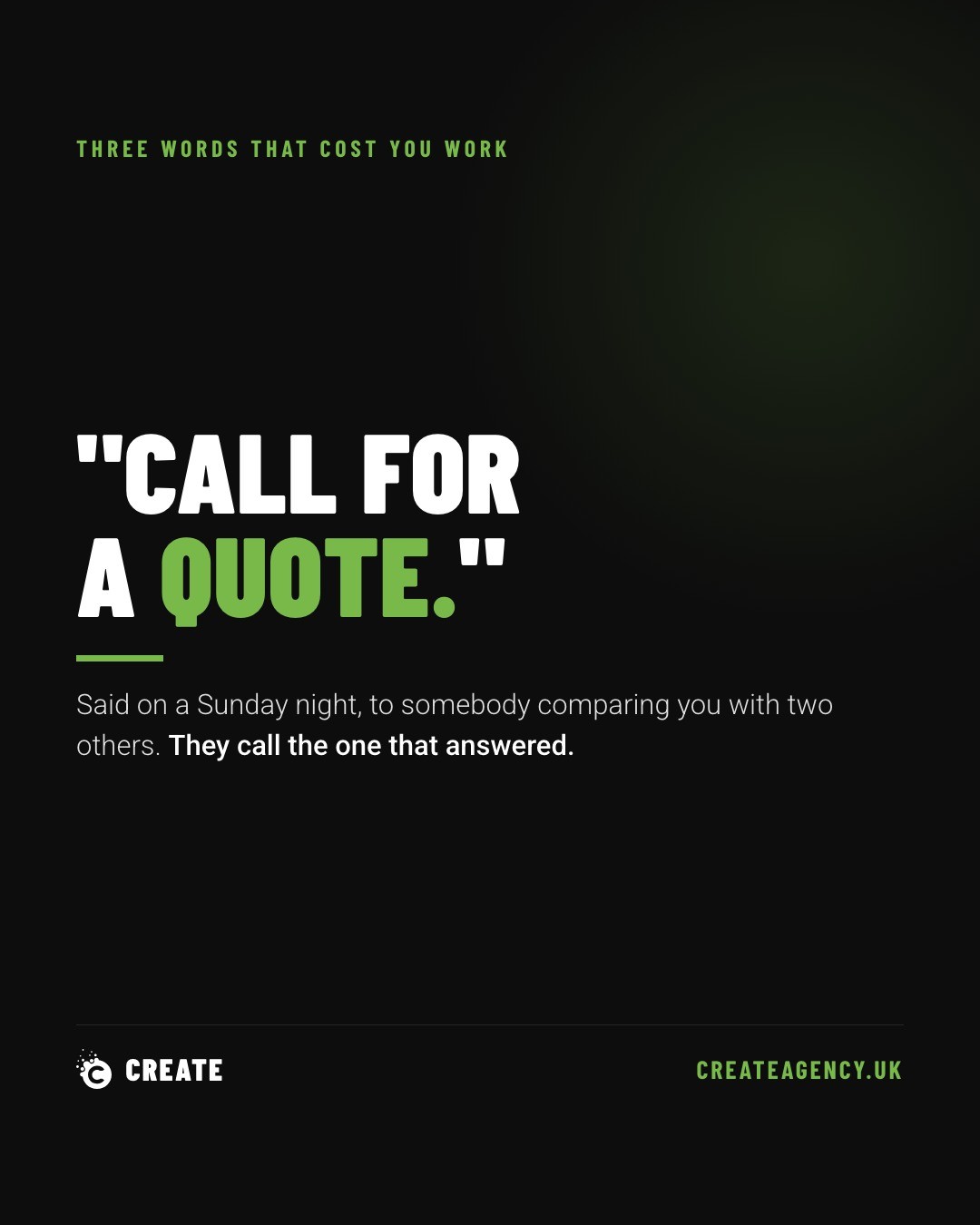
Someone lands on a website at nine o'clock on a Sunday evening wanting to know roughly what something costs. The page says call for a quote. So they do the obvious thing: they open two more tabs. One of those gives them a number. By Monday morning, when the phone finally rings, it isn't ringing about the business that made them wait.
This happens thousands of times a day across trades, professional services, hire companies, anyone selling something with a bit of complexity to it. The intention behind "call for a quote" is usually sound. The execution is quietly losing business to competitors who were willing to show a number.
The Objection Is Fair, But It's Not The Whole Answer
Ask most business owners why they don't publish prices and the answer is reasonable: every job is different, and a wrong number published online is worse than no number at all. A kitchen fit, a commercial lease, a bespoke build: these aren't tins of paint with a fixed SKU and a fixed cost.
Both of those points are true. But they get used as a reason to publish nothing, when the actual problem is narrower: publishing the wrong kind of nothing.
There is nearly always something honest that can be shown without promising a number that turns out to be wrong. A day rate. A starting price. A worked example from a real job. A range, with the assumptions that produced it written next to it in plain English. None of that commits a business to a fixed quote. All of it gives a visitor something to work with at nine o'clock on a Sunday evening, which is when a lot of buying decisions actually start forming.
What We Built This Week Shows How Far This Can Go
On a hire company site we finished this week, we took the idea further, because the business's own systems made it possible. The customer picks a class of equipment and a duration, and the site quotes directly off the real rate card sitting behind it.
There's no generic "from £X" placeholder and no guesswork. The number on screen is the number the business would actually charge, calculated the same way their own team would calculate it, just without a phone call in the middle. That only works because the pricing logic already existed internally; the job was connecting the website to it rather than inventing a calculator from scratch.
Not every business has a rate card tidy enough to expose like that straight away. But the principle holds even without one: the more of the real pricing logic a site can surface, the less reason a visitor has to go looking elsewhere for it.
Nobody Is Obliged To Publish A Full Price List
There are good reasons some things genuinely can't carry a published price: highly bespoke work, regulated quoting requirements, contracts where disclosure would be commercially damaging. That's a legitimate business decision and nobody is arguing every price for every service has to sit on a public page.
The point is narrower than that. A business is not obliged to publish a price for everything. It is, however, competing with whoever publishes something. If a competitor shows a starting price, a day rate, or an instant estimate, and the alternative shows a phone number and a request to call during office hours, the comparison has already been made before either business knows a prospect existed.
Where To Start If Pricing Feels Too Complicated To Show
The fix rarely starts with building a full calculator. It starts with an honest audit of what could be shown without risk: the lowest price point that's ever been charged for the simplest version of the service, a recent job with the cost attached and the variables explained, a rate per day or per hour even if the final total depends on scope.
From there it's a design and content job: deciding where that information sits on the page, how it's framed so it doesn't read as a binding quote, and whether the business's own systems (booking software, a CRM, a spreadsheet of day rates) can eventually feed something more dynamic, the way the hire site now does.
We've built everything from simple pricing pages with worked examples through to live quoting tools wired into a business's own rate cards, and we've seen the difference it makes to the calls that come in on a Monday morning. If pricing on a site currently stops at "call for a quote", it's worth a conversation about what's actually possible to show instead. Our portfolio has a few examples, or book a call and we'll have a straight look at what your site could be showing right now.