Most small businesses assume the answer to quiet order books is more advertising. Spend more, get found more, win more work. It is rarely that simple, and it is rarely the cheapest fix available.
We have looked at hundreds of small business websites over 25 years, and the ones that win work consistently share the same handful of habits. None of them involve a media budget. They involve being genuinely useful, genuinely findable, and genuinely consistent. Here is what actually moves the needle.
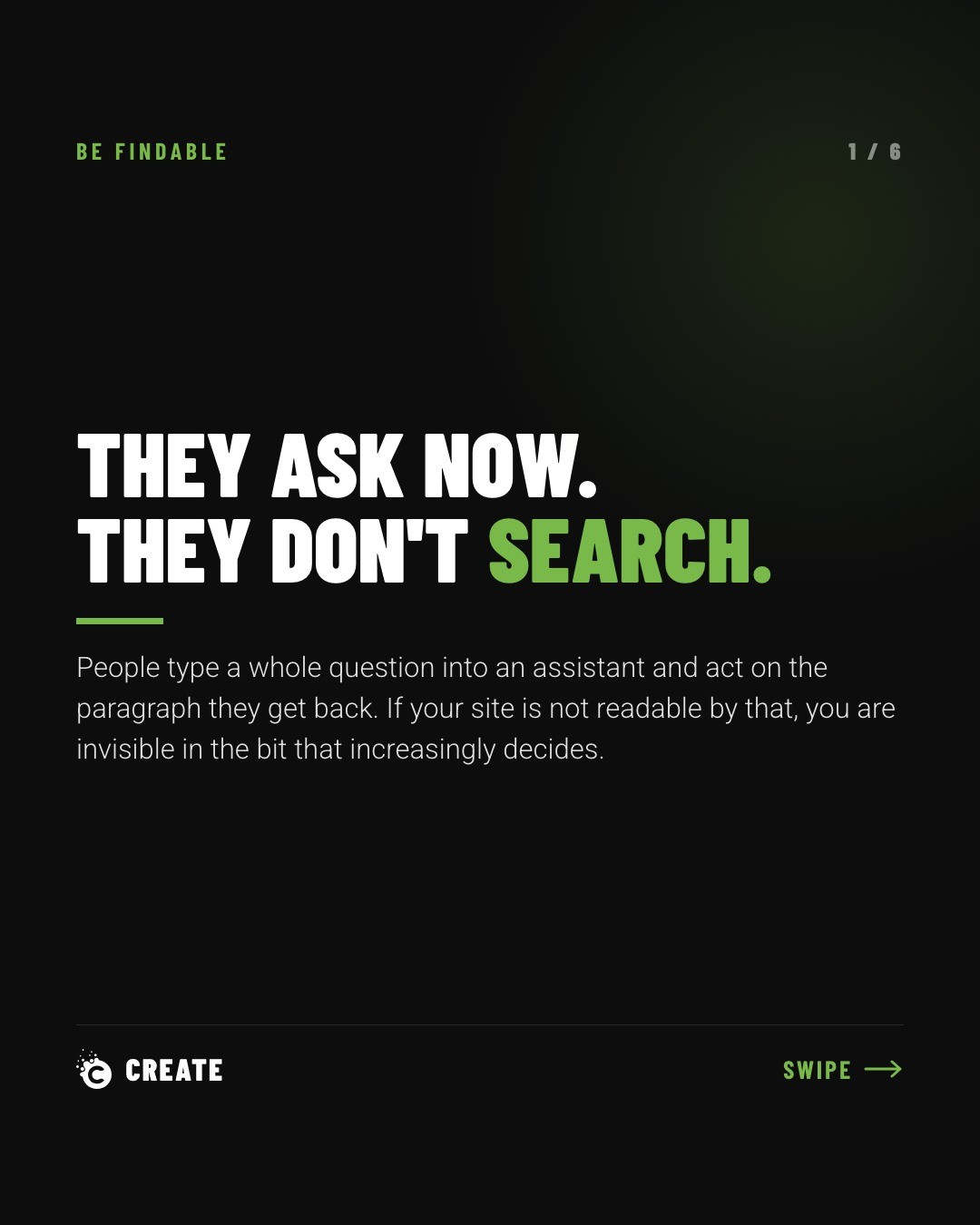
Be Findable When People Ask, Not Just When They Search
Search behaviour has shifted. More people now type a full question into an AI assistant rather than a string of keywords into Google, and they act on whatever answer comes back.
If a website is not structured in a way that assistant can read and quote, that business is invisible in the exact moment a decision gets made. This is not about chasing a trend. It is about writing pages that answer real questions in plain language, with clear headings and straight answers, rather than pages built purely to please a search engine ranking algorithm from 2015.
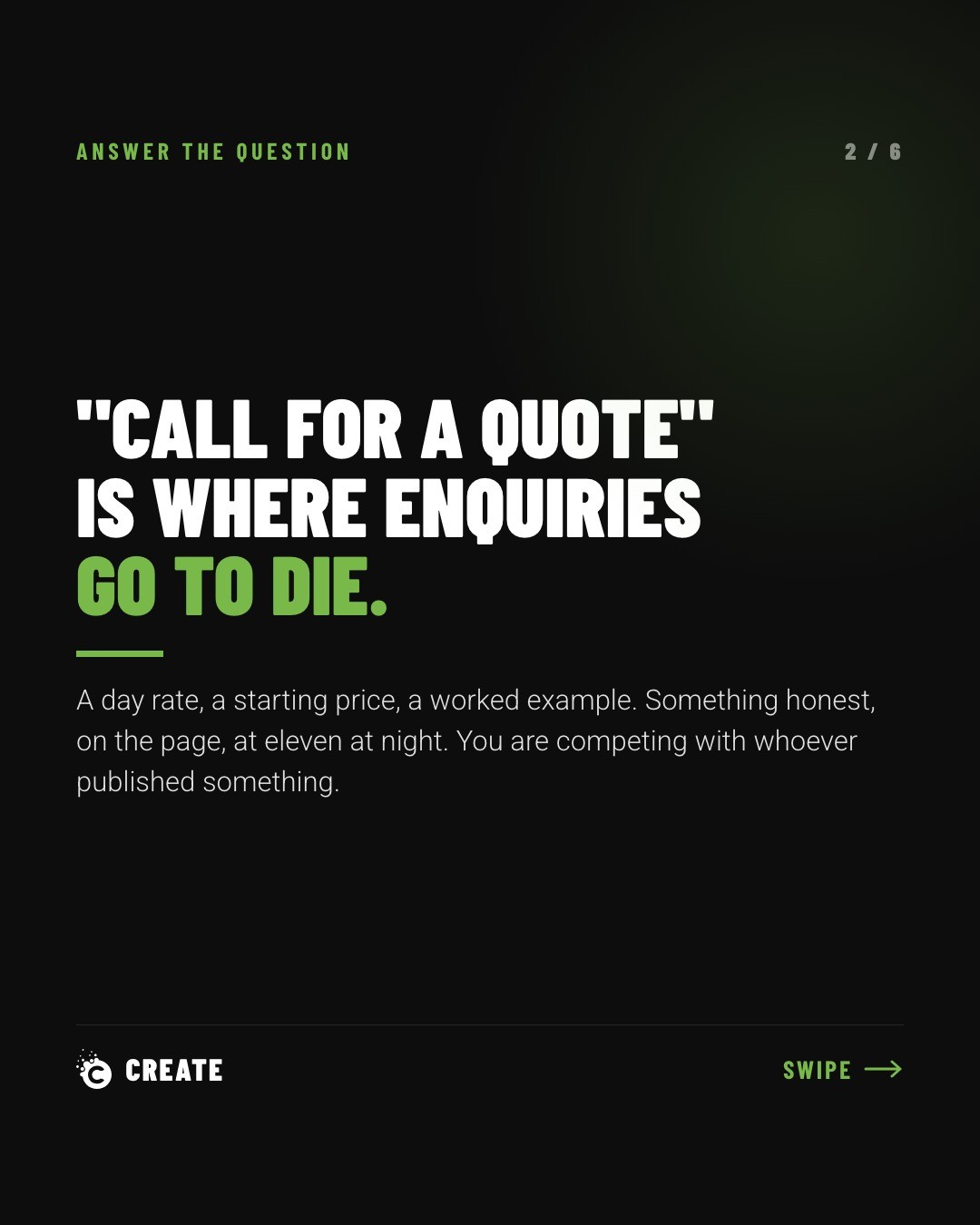
Answer the Question on the Page
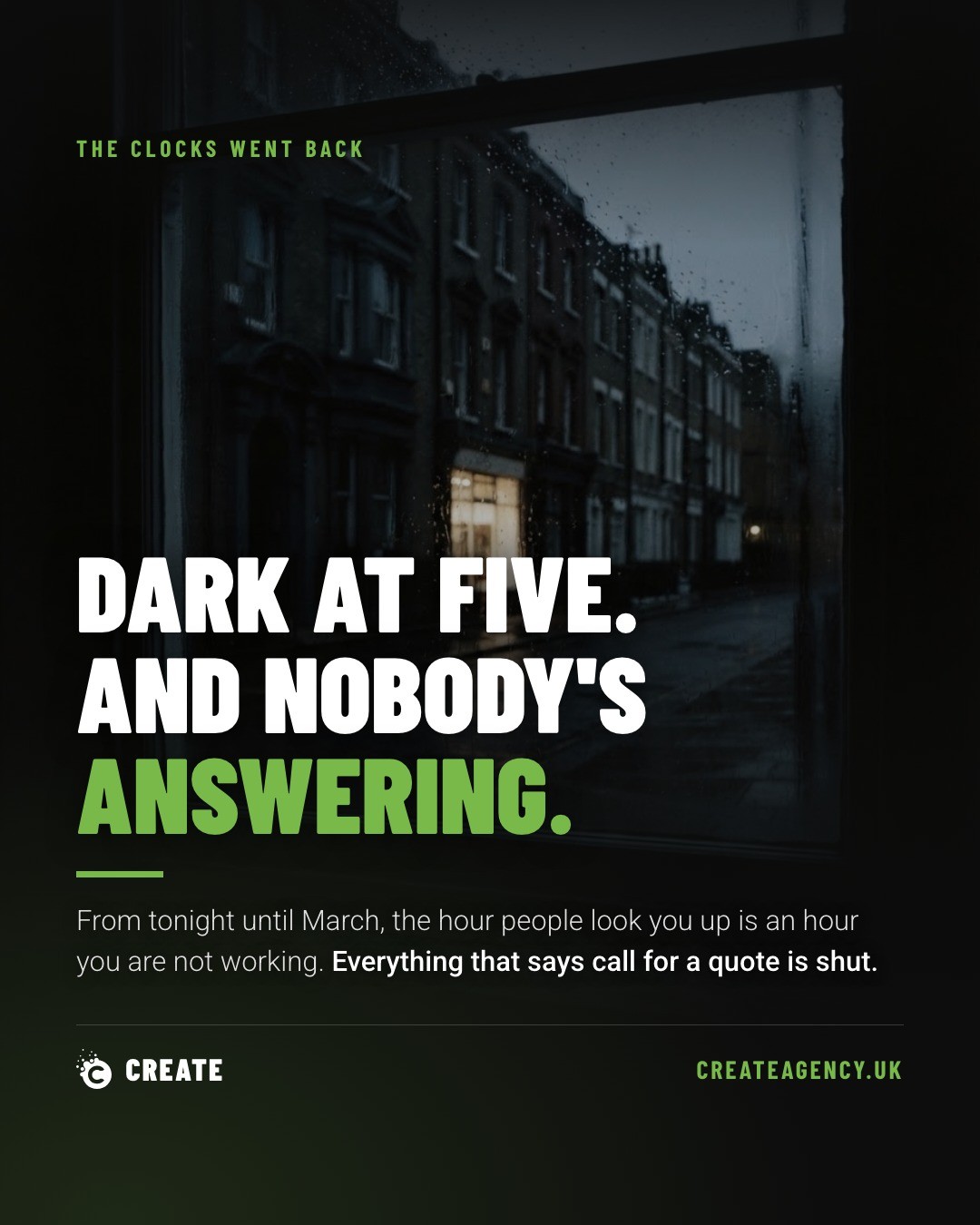
"Call for a quote" is a losing move against a competitor who has published an actual number, a price range, or a worked example on their site.
Every hour spent avoiding pricing transparency is an hour a customer spends finding someone else who will just tell them. A rough range, a sample project cost, a "jobs like this typically run from X to Y" statement: any of these beat silence. Customers do not want to have a conversation to get basic information. They want the information, and then maybe the conversation.
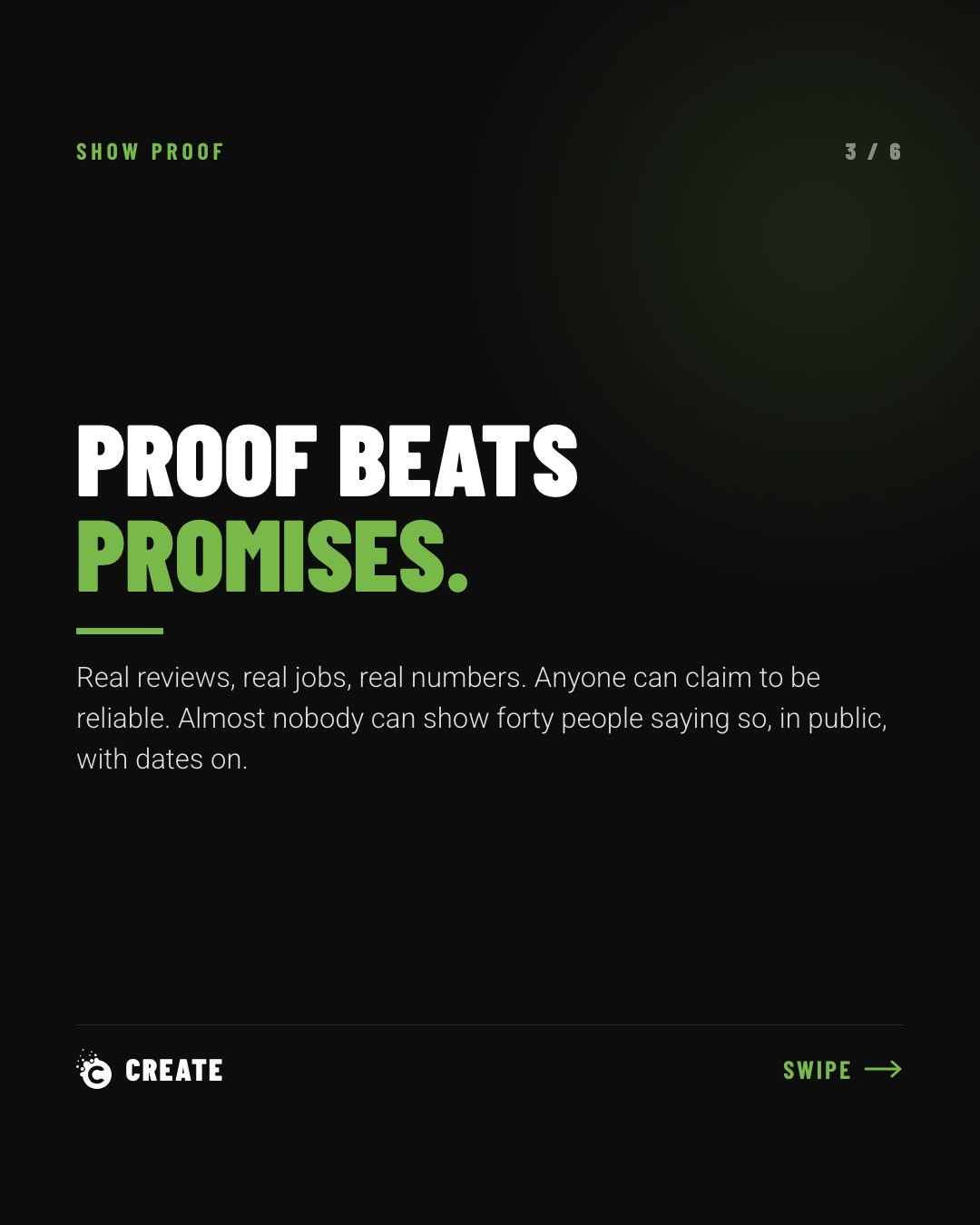
Show Proof, Not Promises
Anyone can write "reliable" on a homepage. Far fewer businesses can show forty real people saying so, in public, with dates attached.
Reviews, testimonials and case studies do the selling that a business cannot credibly do about itself. A single glowing quote is fine. A visible, dated, ongoing stream of them is proof. It signals that the good experience customers are hoping for is not a one-off, it is what actually happens, repeatedly, right now.
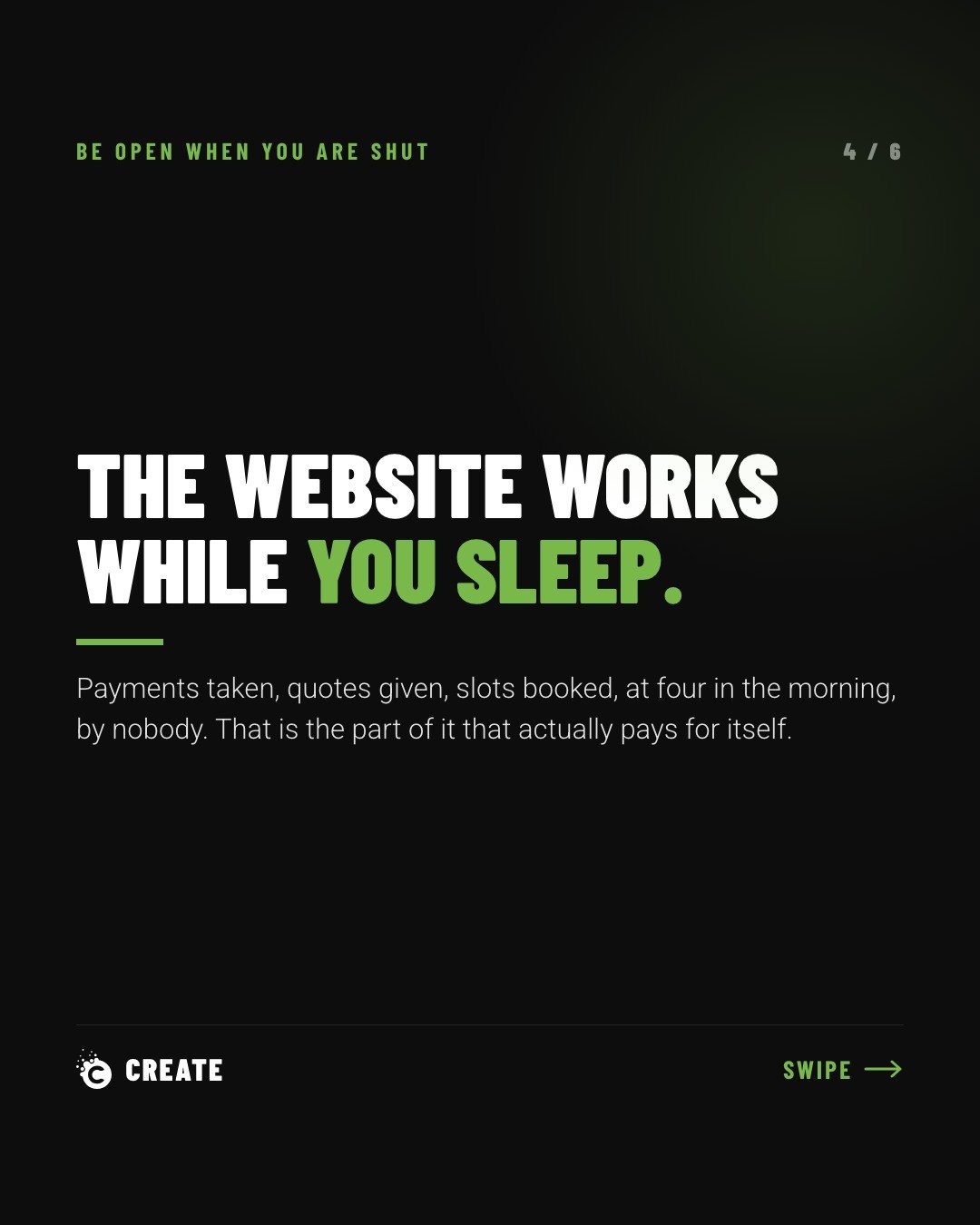
Be Open When the Shop Is Shut
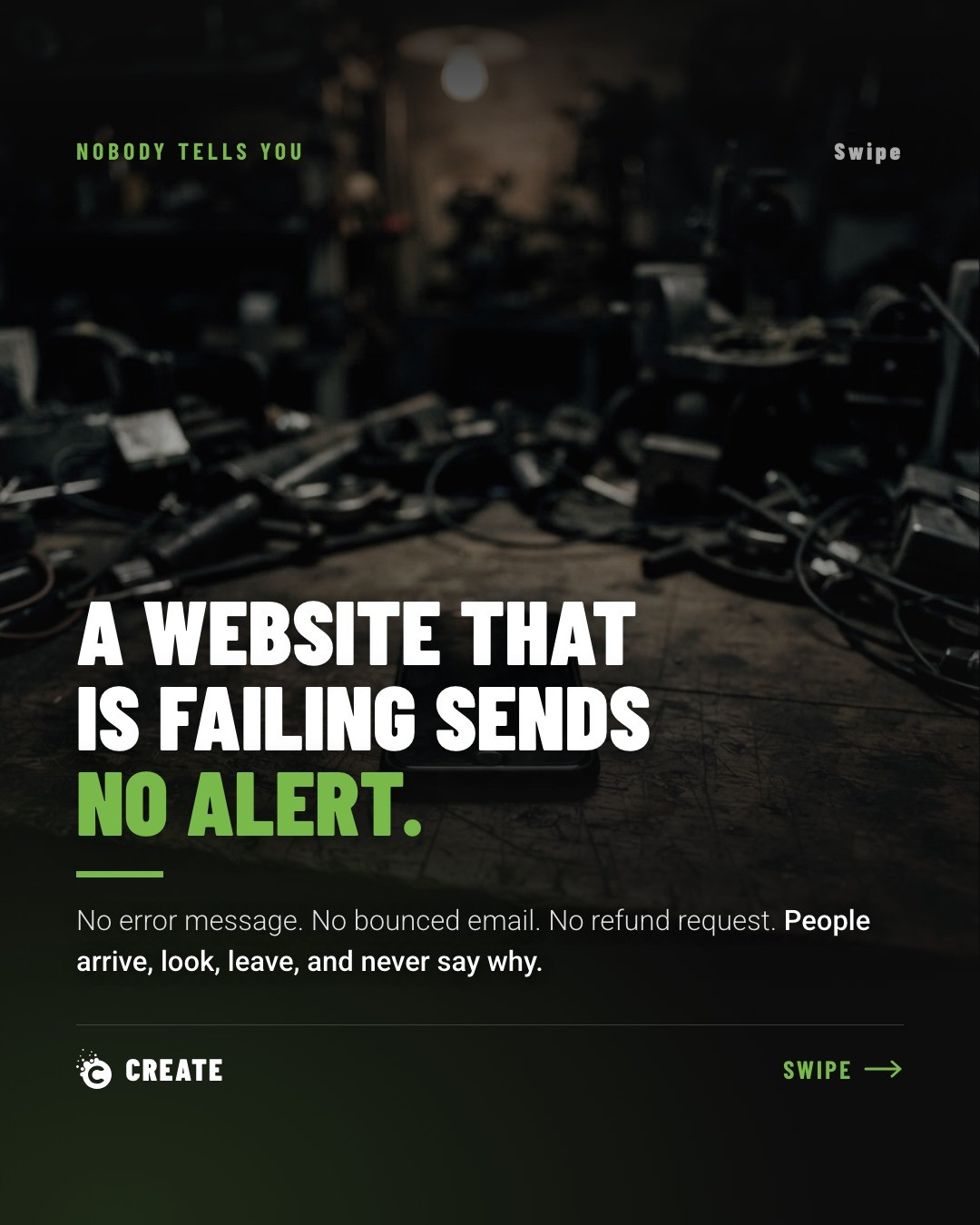
A huge share of enquiries, quote requests and bookings happen outside normal working hours, when nobody is at a desk to answer the phone.
A website that can take a booking, process a payment or generate a quote at 11pm on a Sunday is not a nice-to-have. It is the part of the site that pays for itself, quietly, while the business owner is asleep. Every enquiry that has to wait until Monday morning is an enquiry a faster competitor might already have answered.
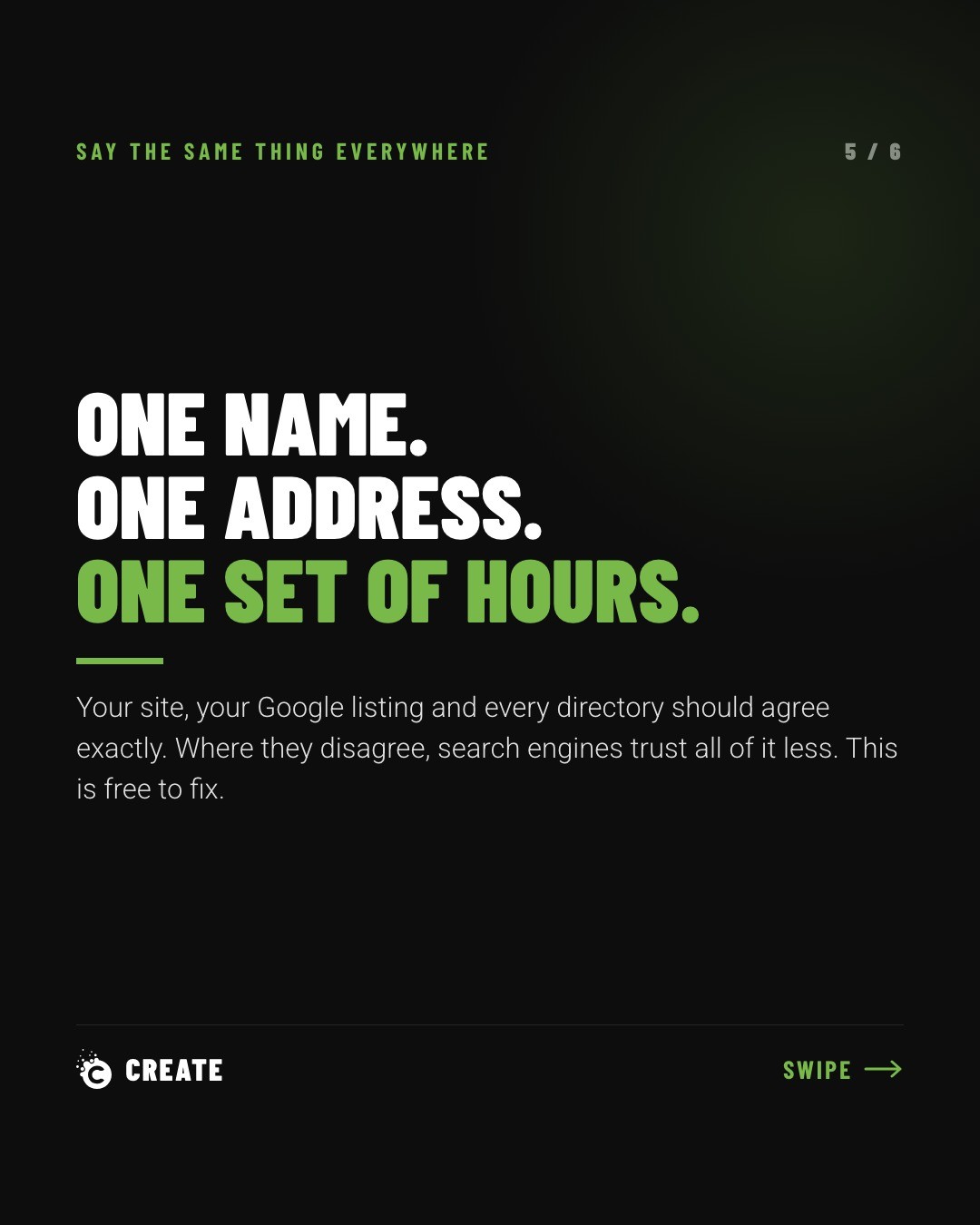
Say the Same Thing Everywhere
A business's website, its Google Business listing and its directory entries should all say exactly the same thing: same address, same phone number, same opening hours, same business name.
Where those details disagree, even slightly, search engines trust all of the listings a little less. This is one of the few fixes on this list that costs nothing but an afternoon of admin. Checking and correcting these details across the main directories and Google is unglamorous work, but it is entirely within reach for any business, and it removes a genuine drag on visibility.
Keep Showing Up
None of the above works if it happens once. Publishing one page of proof, fixing one directory listing, or writing one price guide and then leaving it is better than nothing, but it is not a strategy.
The businesses that win work consistently treat this as ongoing maintenance, not a one-off project. New reviews get added. Pricing pages get updated. Listings get checked again after a house move or a rebrand. Visibility, like fitness, decays the moment attention moves elsewhere.
Where to Start
Most small businesses will read this list and recognise one obvious gap straight away: the pricing page that does not exist, the reviews nobody has bothered to collect, the phone number that is wrong on two of the five directories they are listed in. Start there. Fixing the obvious gap usually does more for enquiry volume than any of the smaller improvements around it.
If it is not obvious which of the six needs attention first, that is usually a sign the whole site could do with a proper look. We help small businesses across Devon and beyond sort exactly this kind of thing: sites that answer questions honestly, take bookings around the clock, and say the same thing everywhere it matters. If that sounds useful, book a call and we will talk through where the gaps are.