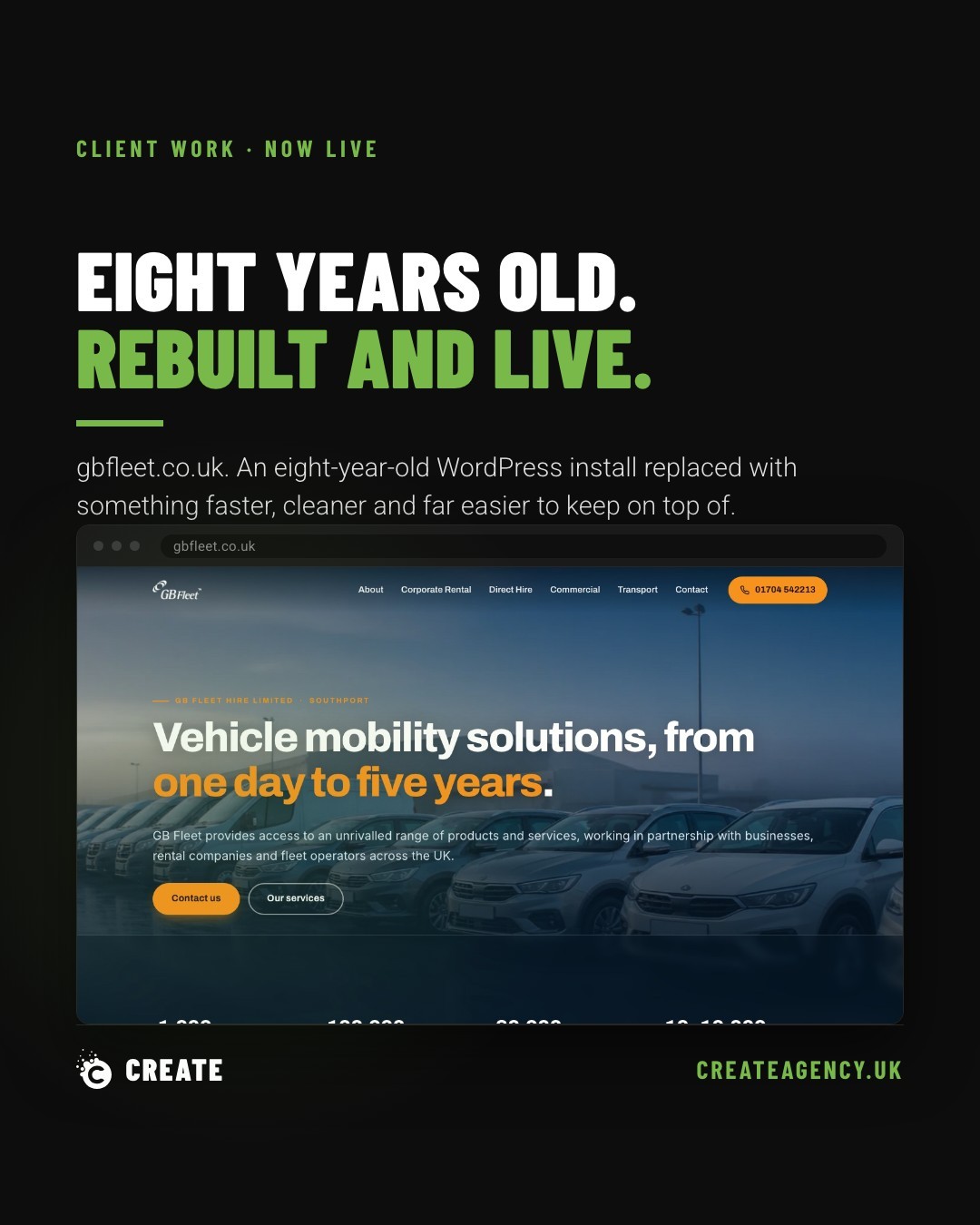
gbfleet.co.uk is live on a rebuilt site, replacing a WordPress install that had been running since February 2018. Eight years doesn't sound dramatic until you think about what else has changed since 2018: three iPhone generations, a pandemic that permanently shifted browsing habits to mobile, and a security landscape that bears almost no resemblance to the one that platform was built for.
This wasn't a redesign for the sake of a fresher look. It was a rebuild prompted by something most business owners don't think about until it bites them: the gap between a website looking fine and a website actually being fine underneath.
The Problem With a Website That Still Looks Fine
Here's the uncomfortable truth about old websites. They can look perfectly presentable right up until the moment they're not. A site built in 2018 was likely running on a version of WordPress, PHP, and a dozen plugins that have since stopped receiving security patches. The front end still renders. The contact form still sends. Nobody internally notices anything wrong.
Meanwhile, the platform underneath has quietly become a liability rather than an asset. Unpatched software is the single most common route into a small business website for anyone looking to cause trouble, whether that's spam injection, defacement, or using the server as a launchpad for something worse. None of this shows up until it does, and by then the fix is reactive and urgent rather than planned and calm.
GB Fleet's old site hadn't failed. It just carried eight years of accumulated risk that nobody could see from the homepage.
Building for How People Actually Browse Now
The site GB Fleet launched in 2018 predates a huge shift in how people find and use trade and fleet services online. Mobile browsing has gone from a secondary consideration to the default. Google has rebuilt its ranking approach around mobile-first indexing. And attention spans for clunky, slow-loading pages have shortened considerably.
The rebuild was a straight response to that. Faster load times, a layout that reads properly on a phone screen without pinching and zooming, and a structure clear enough that a visitor can find what they need in a couple of taps rather than hunting through menus designed for a desktop era.
None of this is exotic. It's the baseline expectation now. But baseline expectations move, and a site frozen in 2018 stops meeting them without anyone actively deciding that it should.
Built So Updates Aren't a Project
One of the quieter reasons old sites go unmaintained is that updating them becomes its own piece of work. If every content change or plugin update carries a risk of breaking something, business owners understandably stop touching the site at all. That's how a site ends up eight years out of date: not through neglect, but through accumulated caution.
The new GB Fleet site is built to avoid that trap. Keeping it current should be routine, not a project that needs scheduling in and bracing for.
Doing the Rollback Before Anyone Needs It
The old site hasn't been deleted. It's sitting on the same server alongside a verified backup of the files and the database, meaning a full rollback would take one command if it were ever needed.
We don't expect to need it. That's rather the point. The cheapest, calmest moment to arrange a rollback plan is before anybody needs one, not while a client is on the phone asking why their site has gone down. It's a small piece of insurance that costs almost nothing to put in place and would save a genuinely bad day if it were ever called on.
It's a habit worth more businesses adopting: treat the rollback plan as part of the launch, not an afterthought bolted on if something goes wrong.
Newer, Fresher, Built for the Next Eight Years
GB Fleet's new site at gbfleet.co.uk is faster, clearer, properly mobile-ready, and straightforward enough to maintain without dread. More importantly, it's not quietly accumulating risk in the background the way the old one eventually was.
If a website has been running untouched for the best part of a decade, it's worth asking the same questions we asked about GB Fleet's: is the platform still supported, is it actually fast on a phone, and is there a tested way back if something goes wrong. If those answers are uncertain, we'd be glad to talk it through. Book a call and we'll take an honest look at where things stand.