Most small business owners think they know what's holding them back. Usually they're wrong. They'll tell us they need more enquiries when the real problem is that nobody can find them, or they'll ask for a new website when what they actually need is a system to stop leads falling through the cracks.
We've seen this pattern across hundreds of projects. There are four distinct stages a business moves through on its way to a properly functioning growth engine, and each one needs a completely different fix. Spend money solving stage three when you're actually stuck at stage one, and that budget disappears with nothing to show for it.
Here's how to work out which stage applies, honestly, before deciding what to spend on.
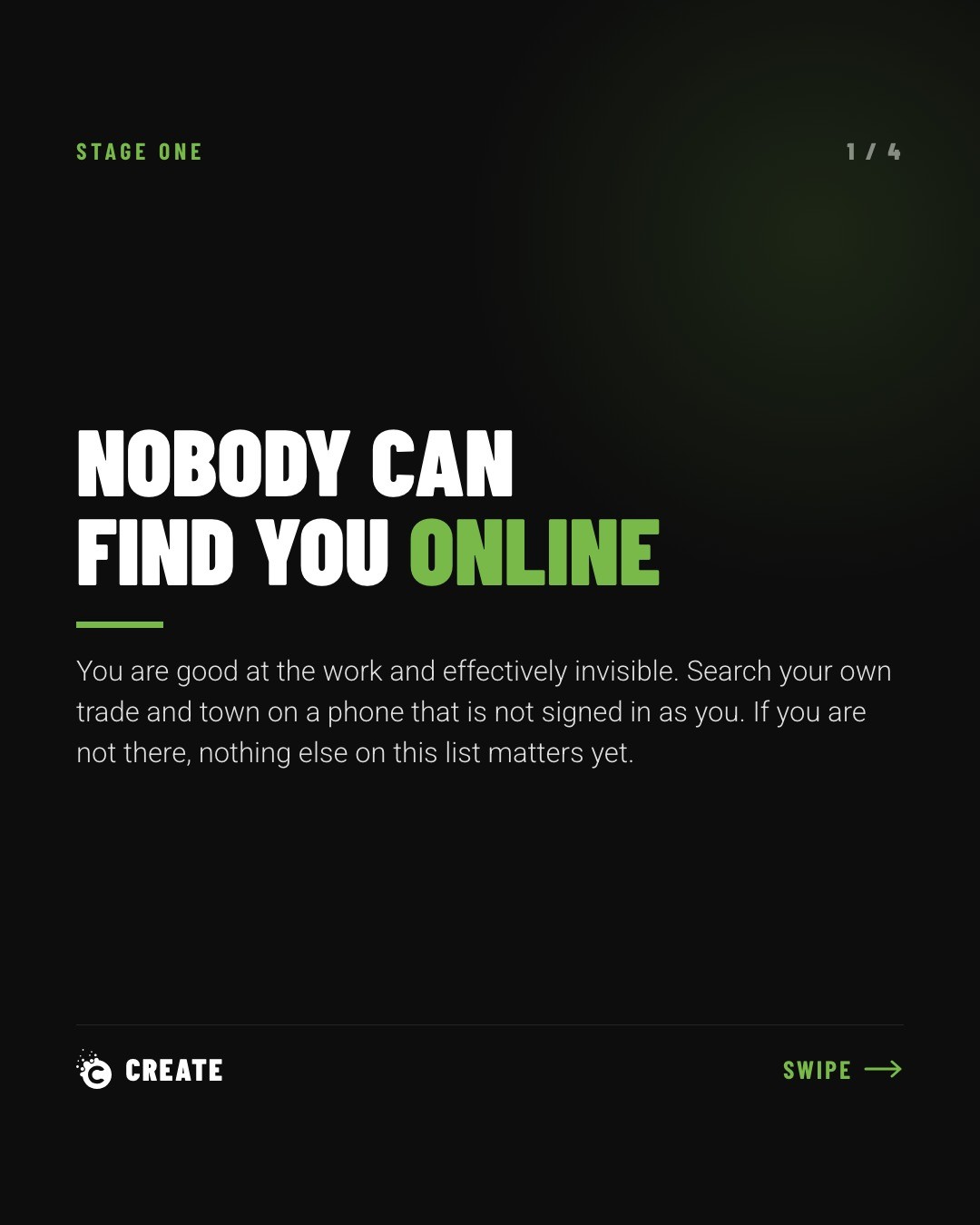
Stage One: You Are Invisible
This is the stage nobody wants to admit they're at, because it means the work itself isn't the issue. The business could be excellent and still be effectively invisible to anyone searching for it.
The test is simple. Search your own trade and your own town on a phone that isn't signed into your accounts. Not your laptop, not a device that already knows who you are. If the business doesn't appear in those results, nothing else matters yet. A beautifully written page or a slicker quote process is irrelevant if nobody ever reaches it.
This is almost always a visibility and SEO problem, sometimes a Google Business Profile that's been neglected, sometimes a site that technically exists but was never built to be found. Fixing it is foundational work, not decoration.
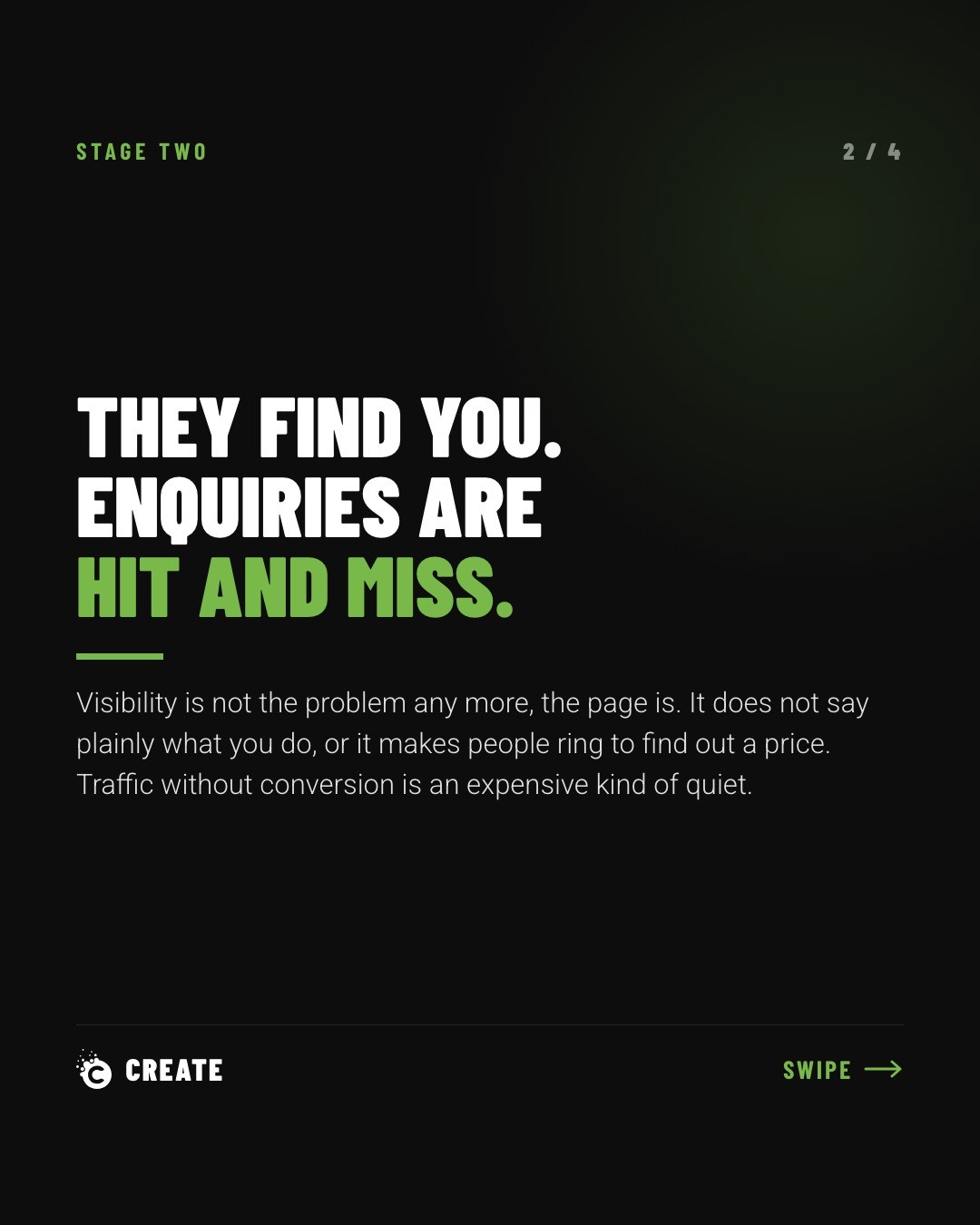
Stage Two: People Find You, But the Page Doesn't Convert
Once visibility is sorted, a different problem shows up. People are finding the business, but enquiries are inconsistent, a trickle one week and nothing the next.
At this stage the website itself is usually the weak point. It doesn't say plainly what the business does, who it's for, or roughly what things cost. Visitors are left to guess, and most people won't ring up just to find out basic information. They'll leave and ring a competitor whose page answered the question for them.
The fix here isn't more traffic. It's a page that does the job of a good salesperson: clear, specific, and unafraid to answer the obvious questions before anyone has to ask.
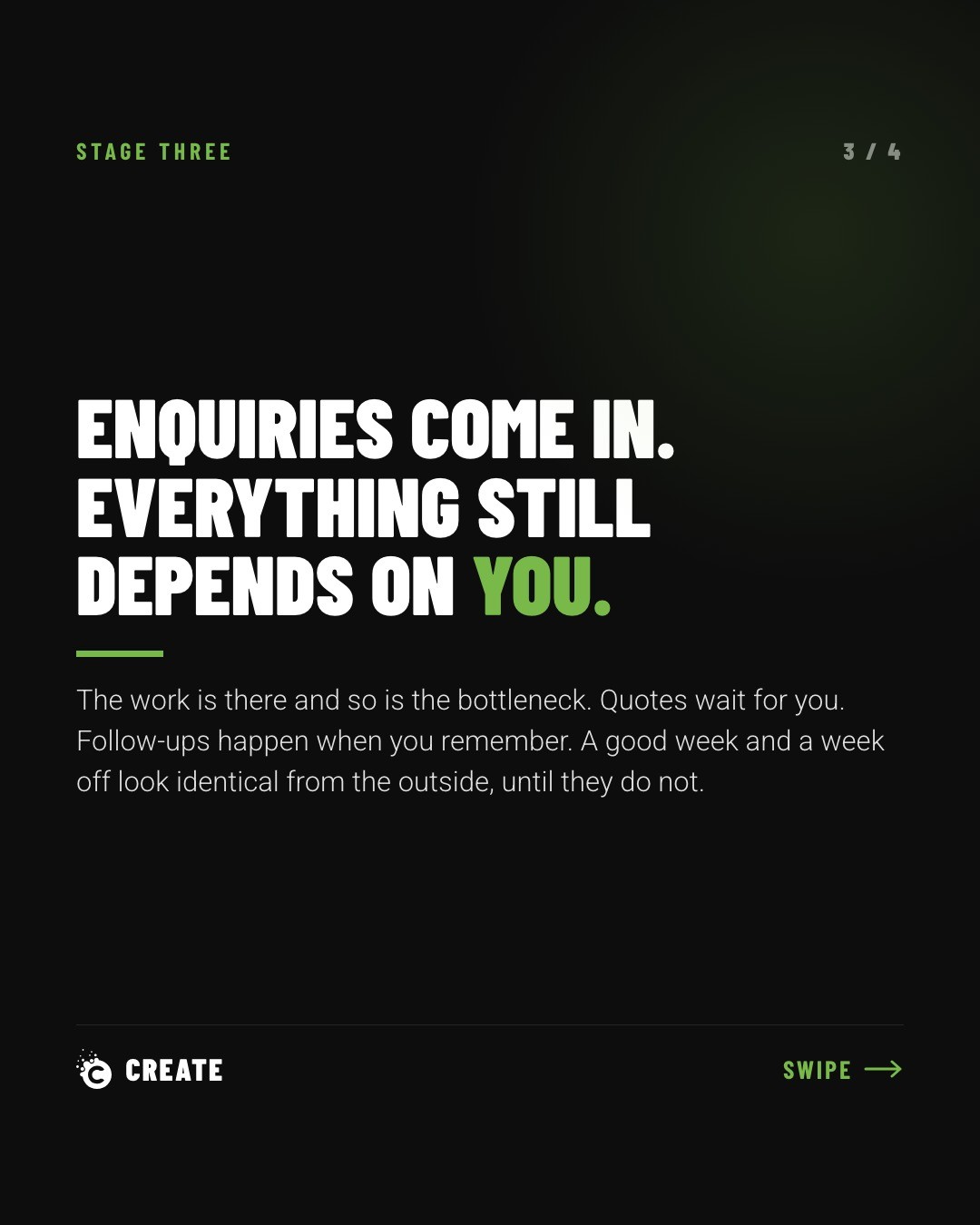
Stage Three: Everything Still Runs Through One Person
This is where a lot of genuinely successful small businesses get stuck for years. Enquiries are coming in steadily. The problem now is that every single one depends on the owner personally remembering to deal with it.
Quotes sit waiting for a free evening. Follow-ups happen when someone remembers, which in a busy week means they often don't. From the outside, a manic week and a week off can look identical, right up until the point they don't, and a customer who didn't get a follow-up has quietly gone elsewhere.
This stage needs process, not more marketing. Simple automation, a proper enquiry log, follow-up sequences that fire whether or not anyone's thinking about them that day. It's unglamorous work, but it's usually the difference between a business that can take a week off and one that can't.
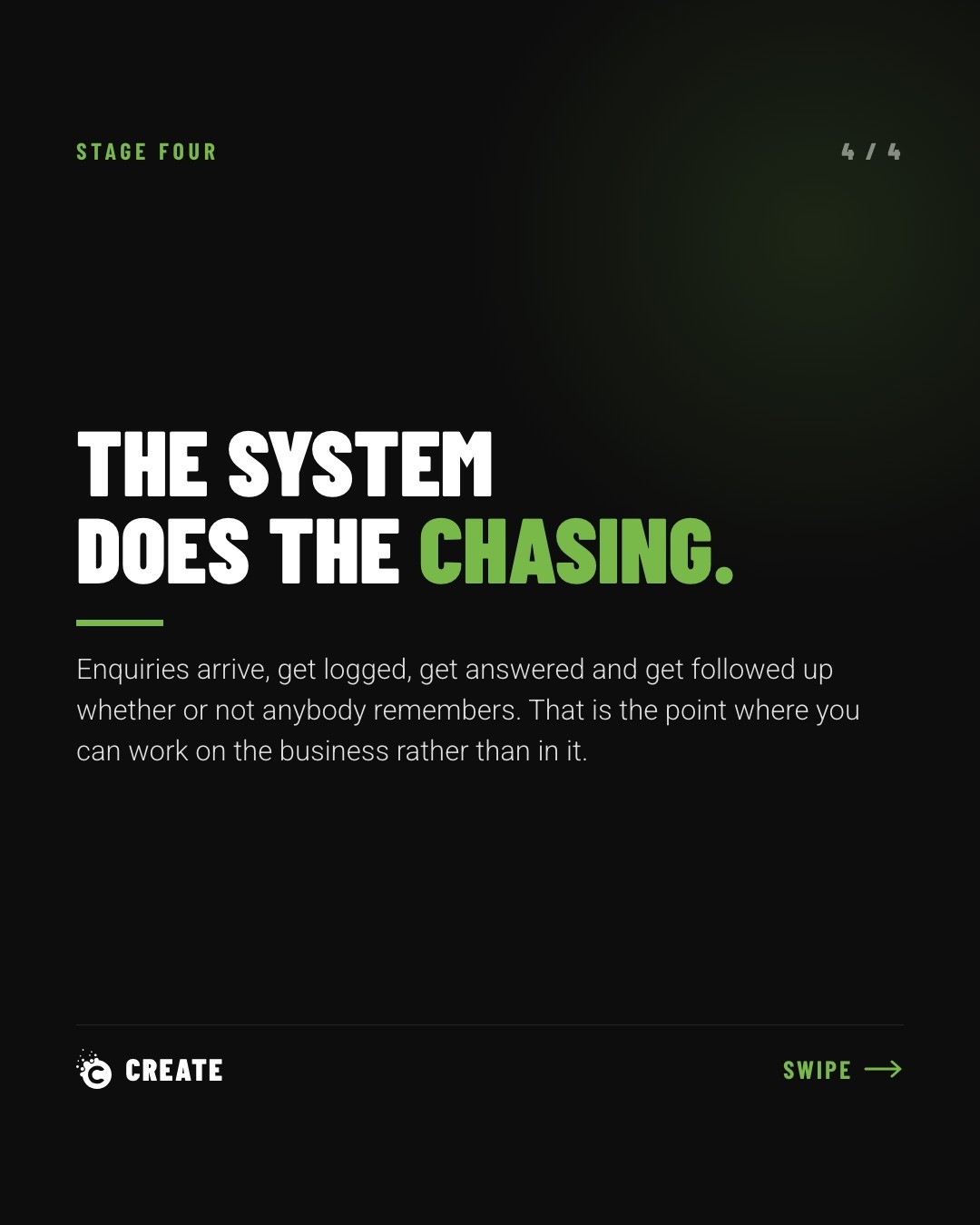
Stage Four: The System Does the Chasing
The end point isn't more leads. It's a setup where enquiries get logged, answered, and followed up automatically, regardless of whether anyone remembers to do it manually. The owner stops being the single point of failure in their own sales process.
Getting here doesn't require enterprise software or a huge spend. It usually means connecting a handful of existing tools properly, something we build into projects through our web development services rather than treating as an afterthought.
Be Honest About Where the Business Actually Sits
The uncomfortable truth is that most business owners guess they're at stage two when they're really at stage one. It's a more flattering diagnosis: the work is fine, visibility is fine, it's just the page that needs tweaking. Often that's simply not true, and no amount of page polishing fixes an invisibility problem.
Being honest about the actual stage changes everything about where money should go next. Spend on lead generation when the real issue is stage three, and the business ends up with more enquiries falling through exactly the same cracks, just faster.
If it's not obvious which stage applies, that's a conversation worth having before any budget gets committed. We've had this exact discussion with businesses across Devon and further afield, and it usually takes less time than expected to work out where the real bottleneck sits. Book a call and we'll help pin it down.