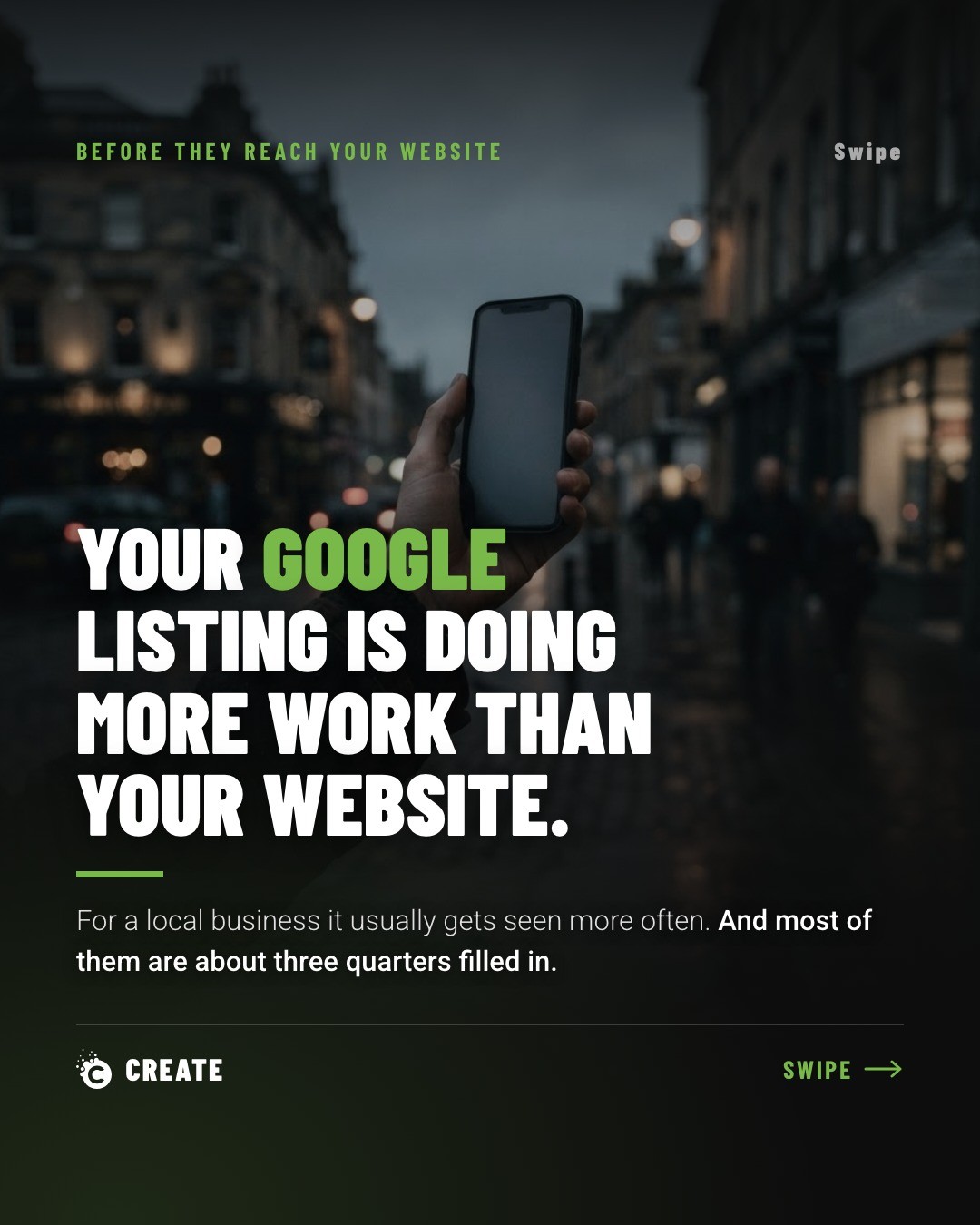
Most local businesses check their website far more often than they check their Google Business Profile. That's backwards. For a huge number of searches, the listing is the only thing a potential customer ever sees. It's free, it takes an afternoon to set up properly, and almost nobody finishes the job.
We look at a lot of these listings as part of our SEO work, and the pattern is always the same. Someone claimed the profile years ago, filled in the basics, and never went back. What looks like a minor admin task left half-done is actually costing real trade. Here's what that half-finished listing is quietly doing to a business.
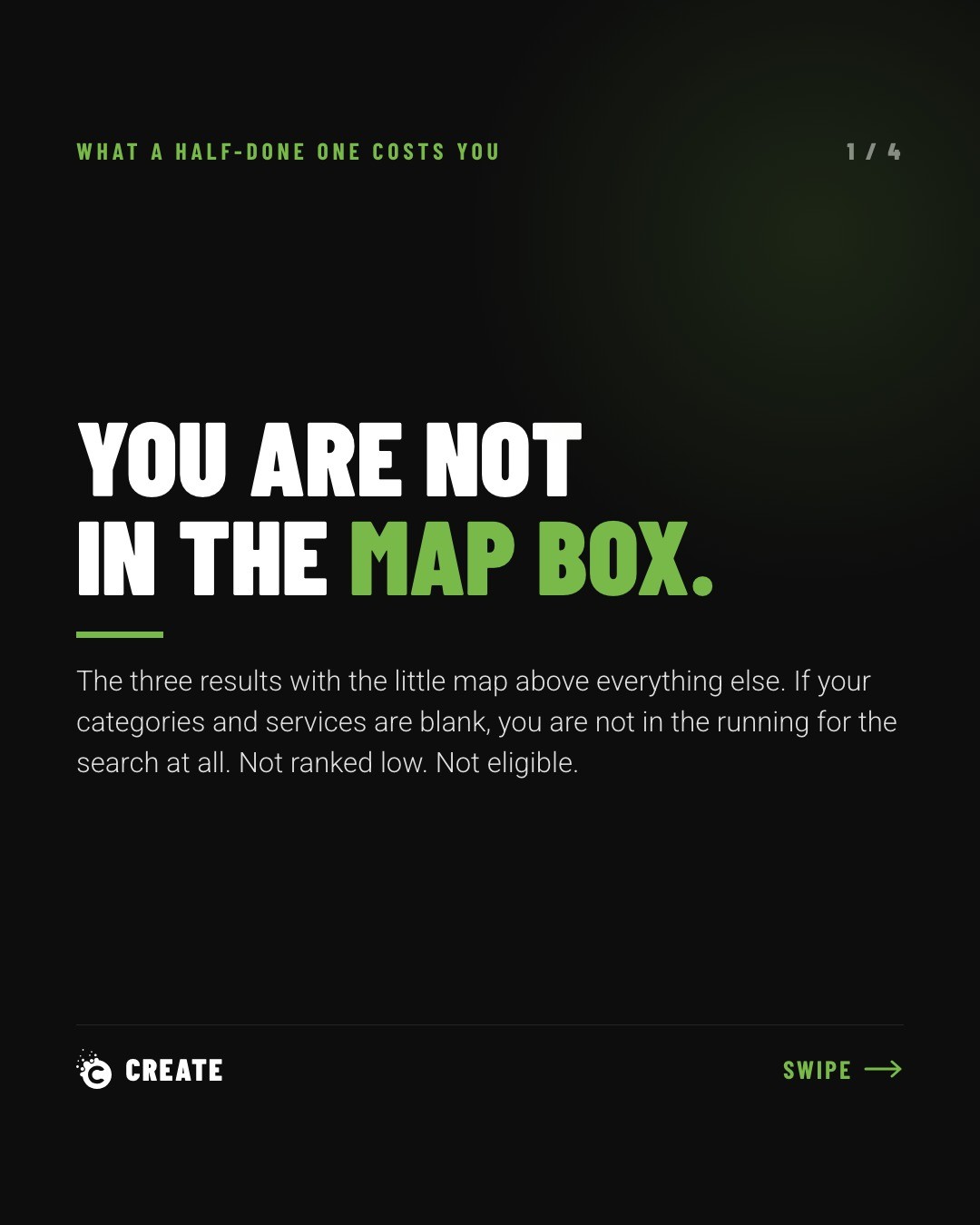
Missing categories mean you're not even in the running
The three results that appear under the map, the ones with the little pins above everything else on the page, are what most people click. If the categories and services on a listing are blank or vague, the business isn't ranked low for a relevant search. It's not in the running at all.
Google can't guess what a business does from a name alone. A joiner who hasn't listed "kitchen fitting" or "bespoke carpentry" as a service simply won't show up when someone searches for it, no matter how good the work is. This is one of the few genuinely free wins in local SEO, and it's routinely left undone.
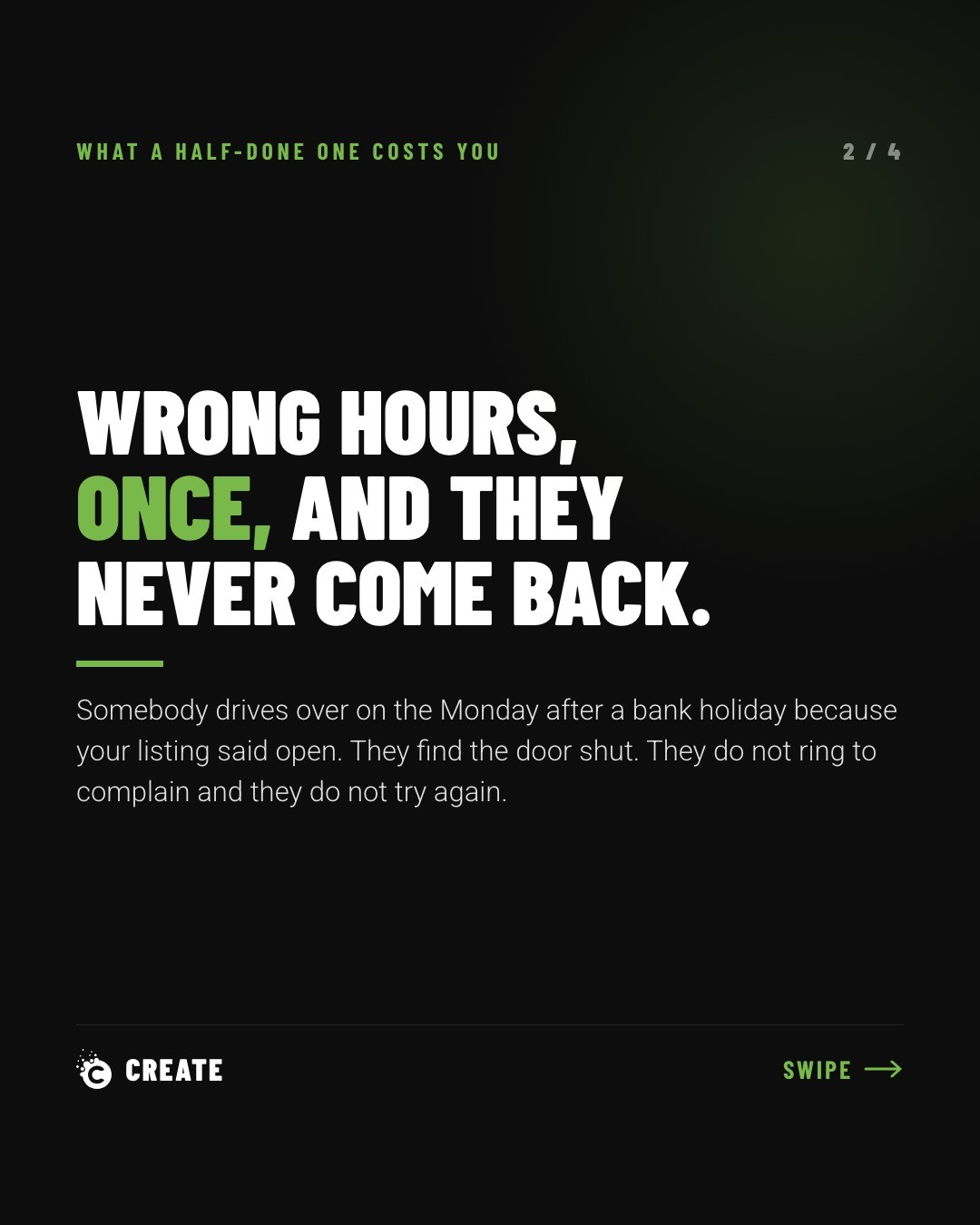
Wrong opening hours lose customers who never come back
A listing that says "open" when the door is shut does real damage. Somebody drives over on the Monday after a bank holiday, finds the place closed, and leaves. They don't ring to complain. They don't try again later in the week. They just go somewhere else that was actually open, or that at least told the truth about it.
Holiday hours, seasonal changes, and one-off closures all need updating in the profile itself, not just on a sign in the window. It takes two minutes. The cost of skipping it is a customer who's now gone to a competitor and has no reason to come back.
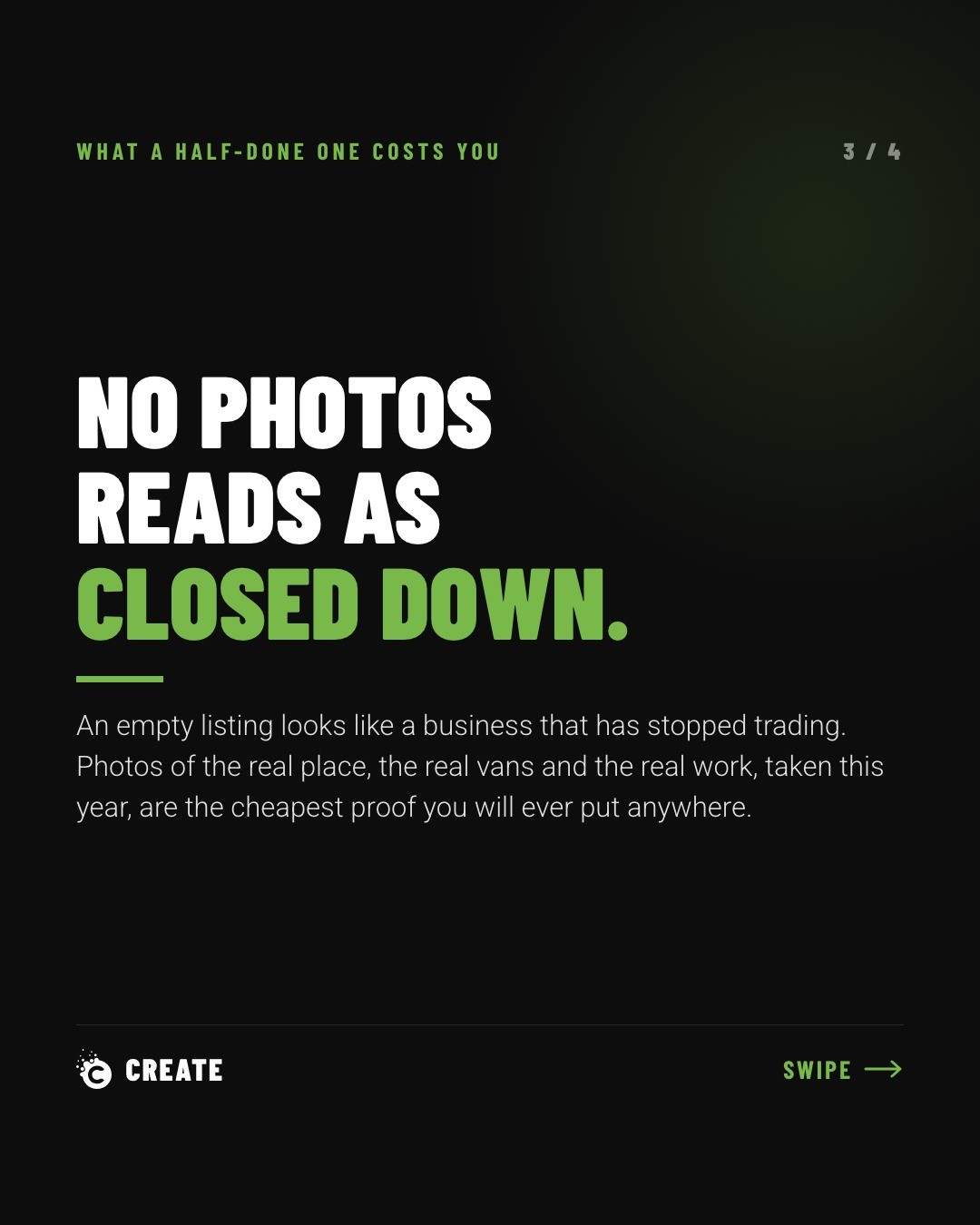
An empty listing looks like a closed business
No photos, or photos that are clearly years old, reads as a business that has stopped trading. People use the image gallery as proof of life before they've even decided to visit. An empty listing with a stock logo and nothing else gives them no reason to trust that the place is still open, let alone worth the drive.
Real photos of the real premises, taken this year, are about the cheapest piece of marketing available to any local business. No design skills needed, no budget required, just a phone and five minutes of actually walking round the place.
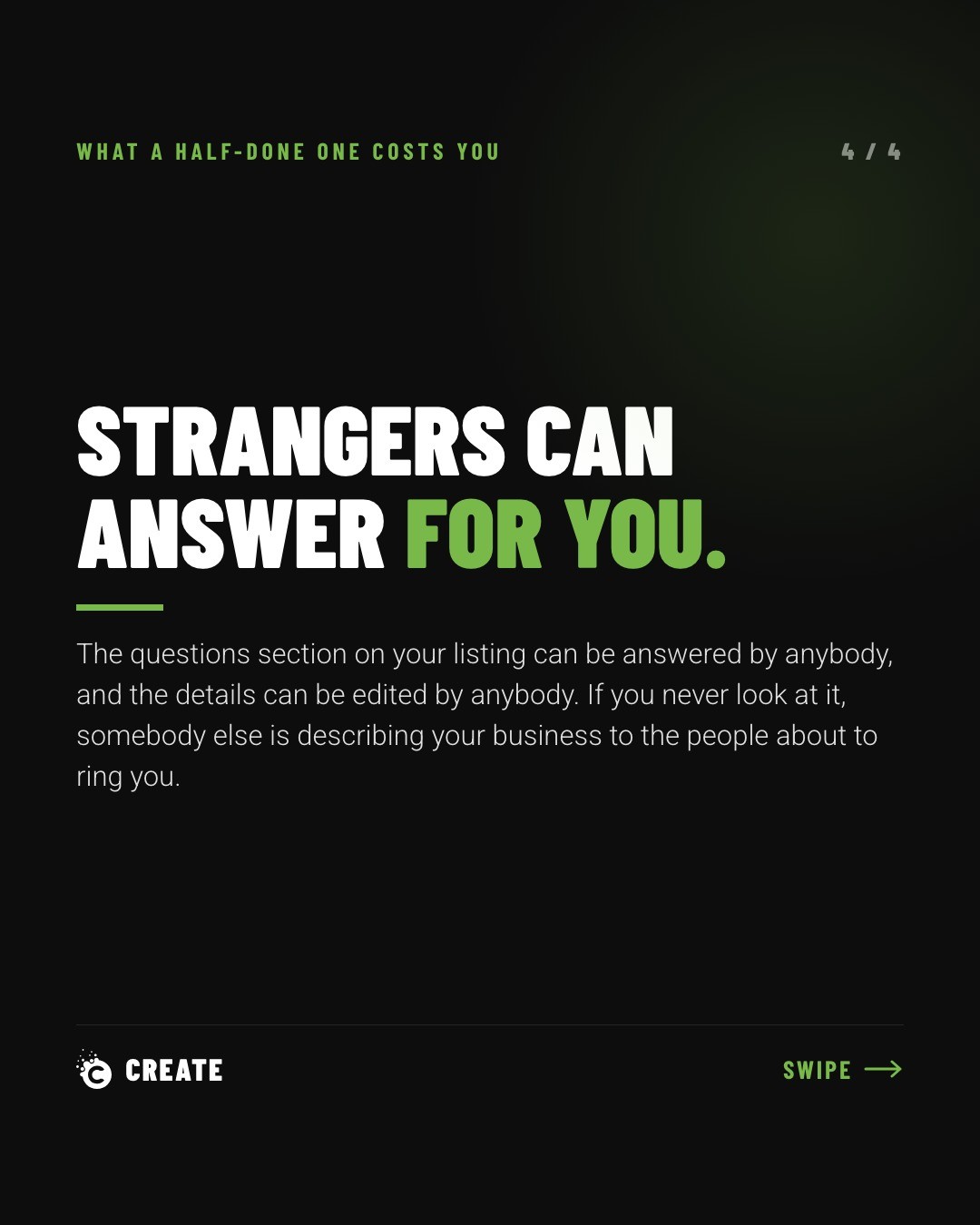
Strangers can describe your business for you
The questions and answers section on a Google listing can be answered by anyone, not just the business owner. Details can be suggested and edited by the public too. If nobody from the business is checking it, somebody else is effectively writing the FAQ that potential customers read right before they decide whether to call.
That might be a well-meaning local filling in a gap. It might also be out of date, wrong, or just unhelpful. Either way, it's now the first impression for anyone who searches.
Check it the way a customer would
The simplest way to see any of this is to look at the listing on somebody else's phone, not signed in, the way an actual stranger searching for the business would see it. Categories, hours, photos, and the questions section all tell a slightly different story once there's no admin login smoothing things over.
This isn't a big job. It's the kind of thing that gets pushed down the to-do list because it doesn't feel urgent, right up until a customer turns up on a day the door is shut. For businesses that want the website and the local listing working together properly, rather than one quietly undermining the other, it's worth a proper look. If that sounds like a conversation worth having, get in touch and we'll talk through what's actually fixable.