There is a point every growing business hits where the answer stops being more hours. The owner already starts early. Already answers the phone in the van, at the till, on the school run. Working harder is not available as a strategy, because there are no hours left to give it.
What is available is a simple question, asked honestly about every job on the list: does this need me, or does it just currently happen to be me?
We ask our clients this constantly, because the answer is almost always more interesting than they expect.
The Jobs That Only Happen to Be You
Quoting a job. Booking someone in. Chasing a deposit. Sending a reminder the day before an appointment. Asking for a review after the work is done. Getting an enquiry through to the right person on the team.
None of that genuinely requires the owner's judgement. It requires somebody, or something, reliable to handle it the same way every time. The reason it still sits on the owner's desk is usually history, not necessity: it started that way when the business was smaller, and nobody has gone back to question it since.
That is the gap we build into. Not glamorous automation for its own sake, but the unglamorous, repetitive administrative load that quietly eats the hours a growing business doesn't have spare.
What We Have Actually Built This Month
Every project we have finished recently has taken at least one of those tasks off a person's plate.
A florist can now take payment for an order without a phone call, freeing up the till and the owner's attention during the busiest part of the day. A hire firm can generate a quote at midnight, when the enquiry actually comes in, rather than waiting for a callback the next morning that the customer may not still want. A claims firm can collect the details it needs from a customer at the roadside, accurately, without someone typing them up from a scribbled note later.
In each case the technology is doing something simple: capturing information correctly, once, at the point it is needed, and routing it to wherever it needs to go next. That is not artificial intelligence solving a hard problem. It is a website, a form, or a small piece of software doing a job that used to depend on a specific person being available.
The Real Test Is Not Speed
It is tempting to judge these changes by whether they are faster than doing it by hand. Sometimes they are, sometimes the difference is marginal. Speed is not really the point.
The real test is what happens to the business on the week the owner is ill, or on holiday, or simply dealing with something else. Does the quote still go out. Does the deposit still get chased. Does the enquiry still land with the right person, or does it sit in an inbox until someone remembers to look.
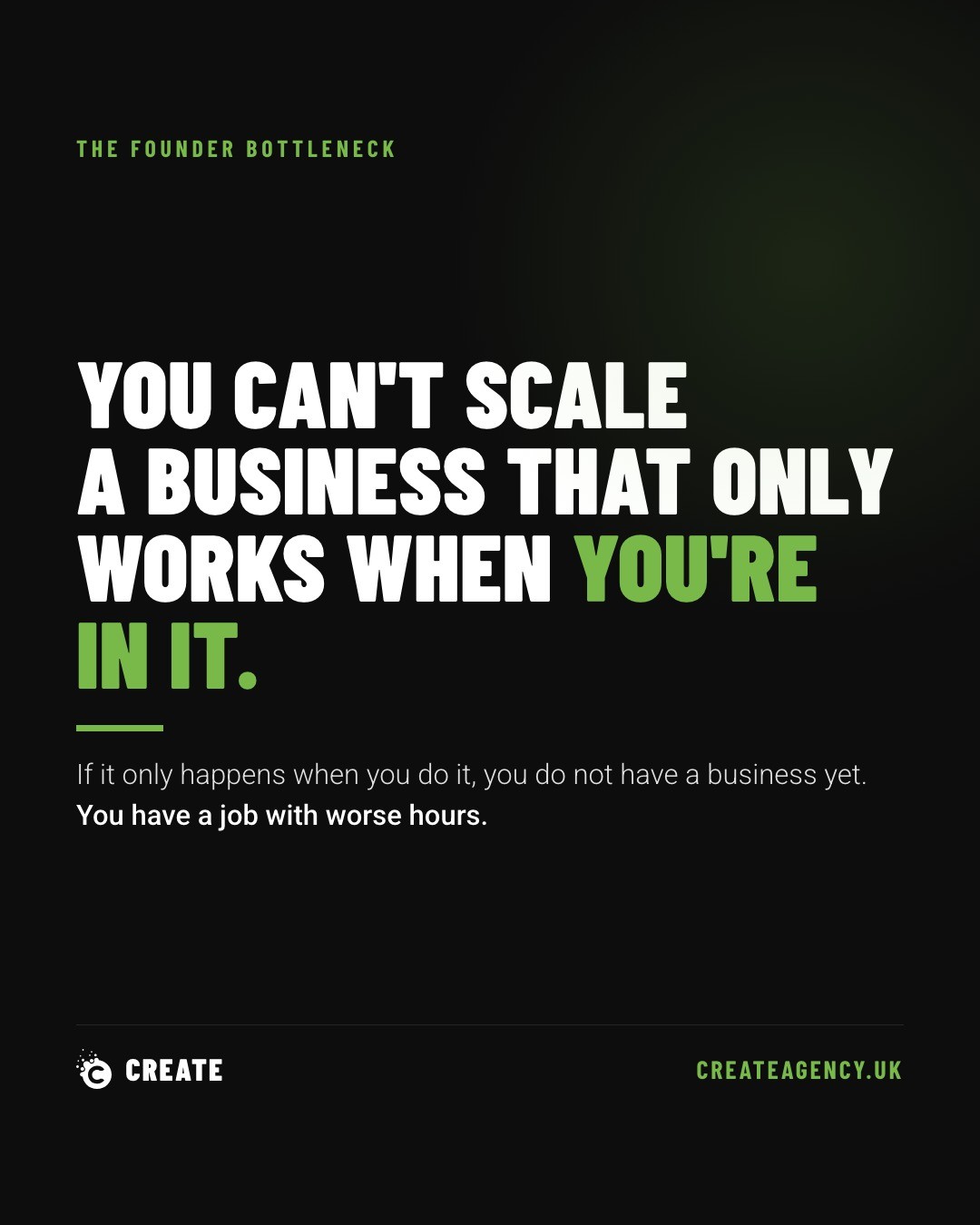
A business that only functions when one specific person is at their desk is not really a business yet. It is a very well organised job. There is nothing wrong with that as a starting point, most businesses begin exactly there, but growth tends to expose it fast. More customers means more of these small tasks, and more of them landing on the same overloaded person.
Where to Start Looking
We would not tell any business to automate everything at once. That is a good way to spend money solving problems that were not actually costing much. The more useful approach is to list out the recurring, repetitive tasks that pass through the owner or a key member of staff, and rank them by two things: how often they happen, and how much they depend on that specific person's judgement rather than just their availability.
Anything that scores low on judgement and high on frequency is usually worth looking at first. Quoting, booking, chasing payment, and following up are the classic candidates because they happen constantly and rarely need real discretion.
We have spent 25 years building the web systems that sit behind these decisions, for businesses across Devon and further afield, and the projects that make the biggest difference are rarely the flashiest ones. If any of this sounds like a familiar bottleneck, it is worth having a proper conversation about which of those tasks could quietly stop needing you. Book a call and we will talk through where to start.