The fitness industry is one of the most visually competitive sectors on the internet. Gyms, personal trainers, supplement brands, and coaching businesses are all fighting for the same attention in the same feeds, the same search results, and the same split-second first impressions. A website that merely looks decent is not a competitive advantage; it is a baseline expectation that most brands still fail to meet.
We have built sites for fitness businesses across a range of niches, and the pattern is consistent. The brands that generate real enquiries and convert traffic into members or bookings are not always the biggest or the best-funded. They are the ones with websites built around clarity, speed, and a clear sense of what action they want a visitor to take.
If your current site feels flat, dated, or forgettable, that is not a cosmetic problem; it is a commercial one.
First Impressions Happen in Under Three Seconds
Research has consistently shown that visitors form a judgement about a website within a few seconds of landing on it. In a sector where energy, confidence, and results matter enormously, a slow-loading page or a cluttered layout communicates exactly the wrong things. It suggests that the attention to detail stops at the front door.
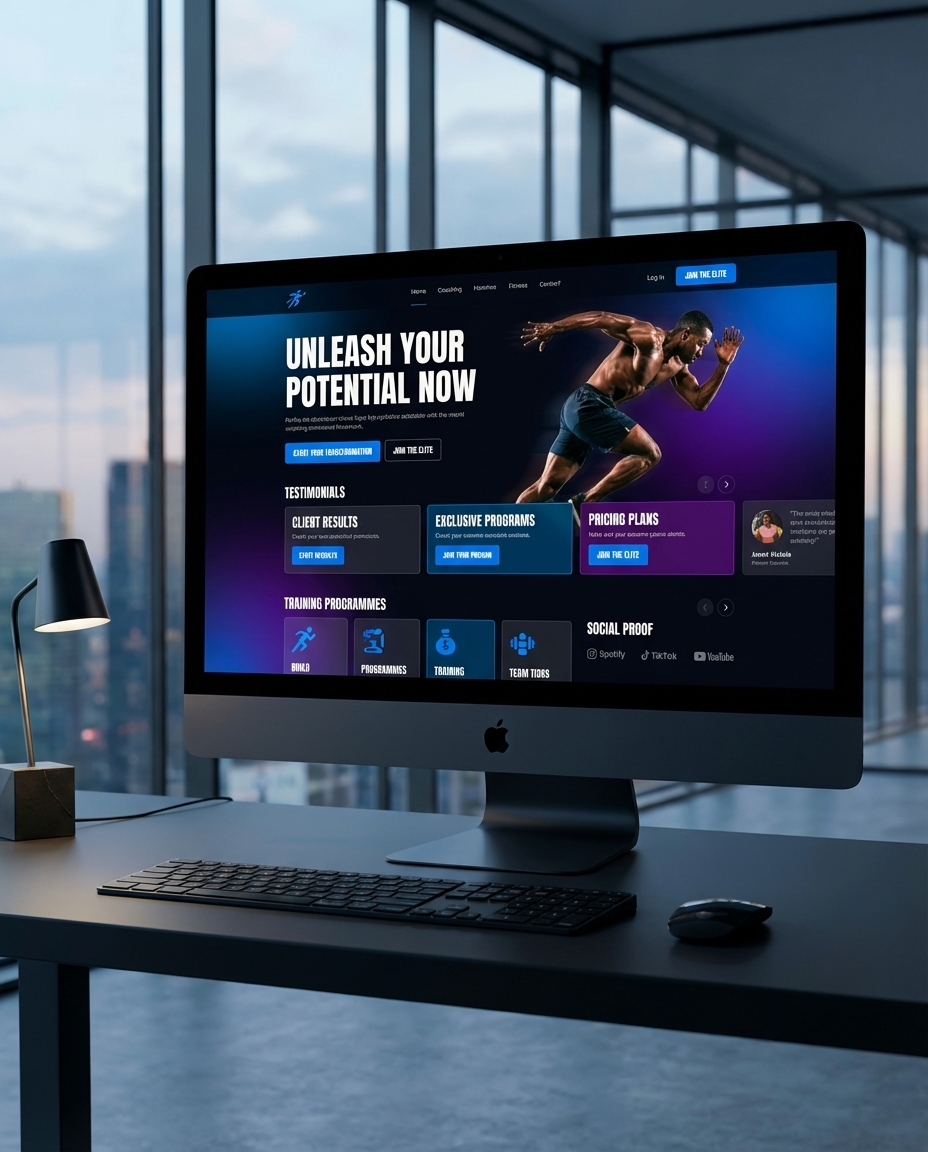
For fitness brands specifically, the visual hierarchy of a homepage needs to work immediately. Strong imagery, a focused headline, and a single clear call to action (whether that is booking a free trial, starting a consultation, or buying a product) should all be present without the visitor needing to scroll or think too hard.
Credibility Cannot Be Assumed
One of the most common mistakes we see is fitness brands assuming their reputation will carry the weight online that it does in person. A gym with a loyal local following and excellent coaches can still lose online enquiries to a competitor with a better-structured site, because trust signals on a website have to be explicit.
Transformation results, coach credentials, client testimonials, accreditations, press mentions: these need to be surfaced prominently, not buried on an About page that most visitors will never reach. Social proof is not decoration; it is a functional part of the conversion journey.
Performance and Mobile Experience Are Non-Negotiable
The majority of fitness-related searches happen on mobile, often in the moment: someone is passing a gym, watching a fitness video, or looking for a PT after a frustrating workout. A site that performs poorly on a phone, loads slowly, or presents a compressed version of a desktop layout will haemorrhage those visitors before they ever engage.
Page speed, mobile responsiveness, and clean technical architecture are not optional extras. They directly affect both user experience and search visibility. Google's ranking systems weigh these factors heavily, which means a slow or poorly structured fitness site is doubly disadvantaged; it loses visitors and it loses organic search positions at the same time.
Messaging That Matches the Brand's Energy
Fitness is an emotional purchase as much as a rational one. People do not just buy a gym membership or a coaching programme; they buy a version of themselves they want to become. The copy, the imagery, the tone, and the structure of a fitness website all need to reflect that.
Generic stock photography of models in spotless gyms fools nobody. Authentic visuals (real coaches, real environments, real client results) combined with copy that speaks directly to the specific anxieties and ambitions of the target audience will consistently outperform a polished but impersonal approach. Knowing who you are talking to, and being specific about it, is what separates a fitness website that converts from one that simply exists.
What a High-Performance Fitness Site Actually Requires
In practical terms, the fitness websites we build that perform best share a consistent set of characteristics. They load quickly across all devices. They lead with a clear value proposition rather than a brand statement. They make the next step (booking, enquiring, buying) obvious and frictionless. They build credibility through visible proof rather than claims. And they are built on a CMS that allows the business to update content, add case studies, and run promotions without needing a developer on speed dial.
None of this is revolutionary. But the number of fitness brands operating on sites that get these fundamentals wrong remains surprisingly high.
If your fitness business is ready to treat its website as a commercial asset rather than a digital brochure, take a look at what we do across web design, branding, and lead generation, or book a call with us to talk through where your current site is letting you down.