Most website delays have nothing to do with building a website. They come from decisions arriving in dribs and drabs over five or six weeks: a logo file here, a change of mind about navigation there, a homepage headline that gets rewritten for the third time in week four. The build itself rarely takes that long. The indecision does.
We built our seven-day process to remove that problem entirely. Idea on a Monday, live the following Monday. Not a template, not a stripped-down rush job, but a structure that forces every decision to happen when it needs to happen, rather than leaking out over a month.
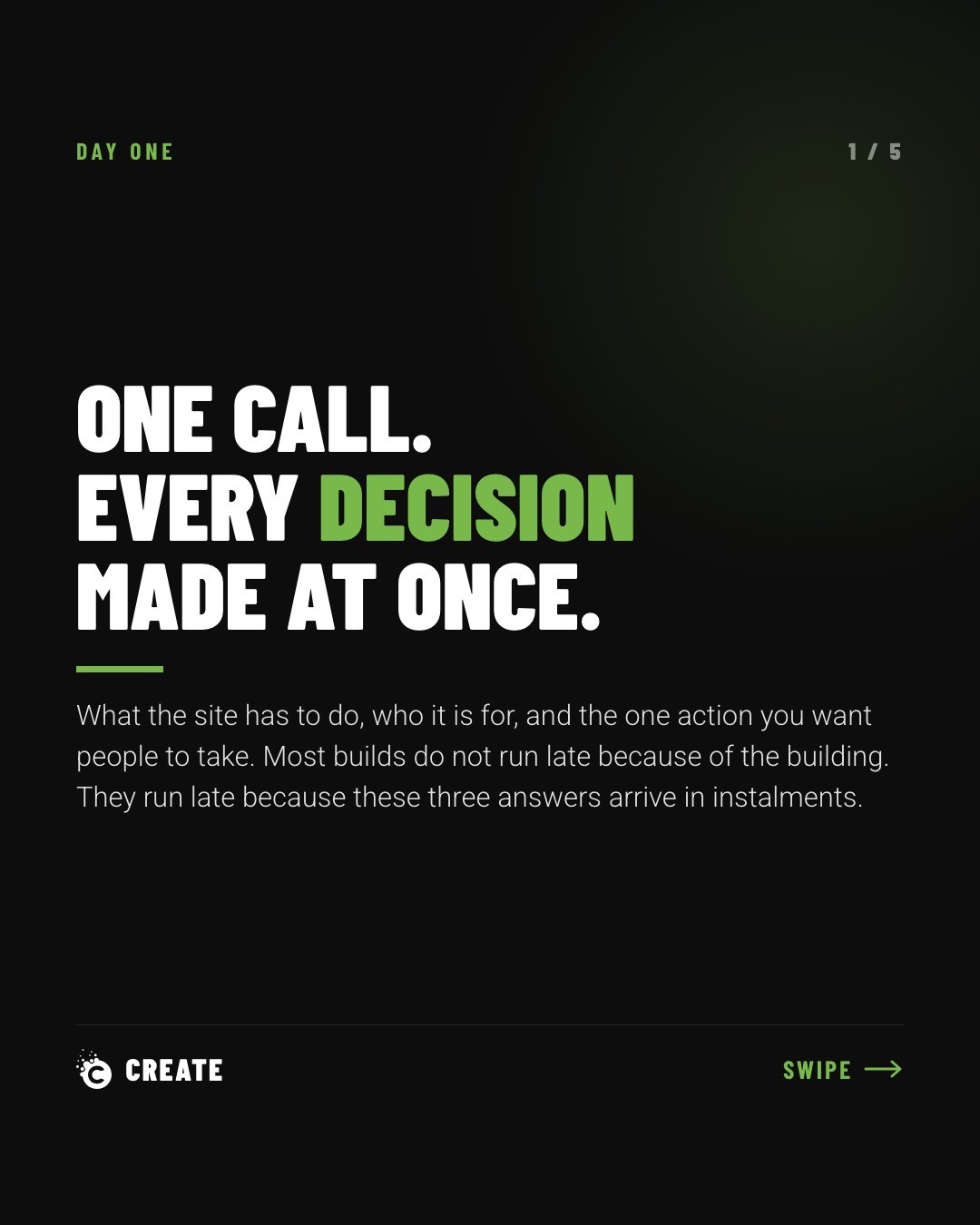
One Call, Every Decision, Day One
The whole project hinges on a single conversation at the start. What the site has to do, who it is for, and the one action a visitor should take. That is the brief, in full, in one sitting.
We have sat through enough projects to know that builds do not run late because of the building work. They run late because those three answers arrive in instalments: a call about audience in week one, a rethink about goals in week three, a new idea about the call to action in week five. Nailing all three on day one is what makes the other six days possible.
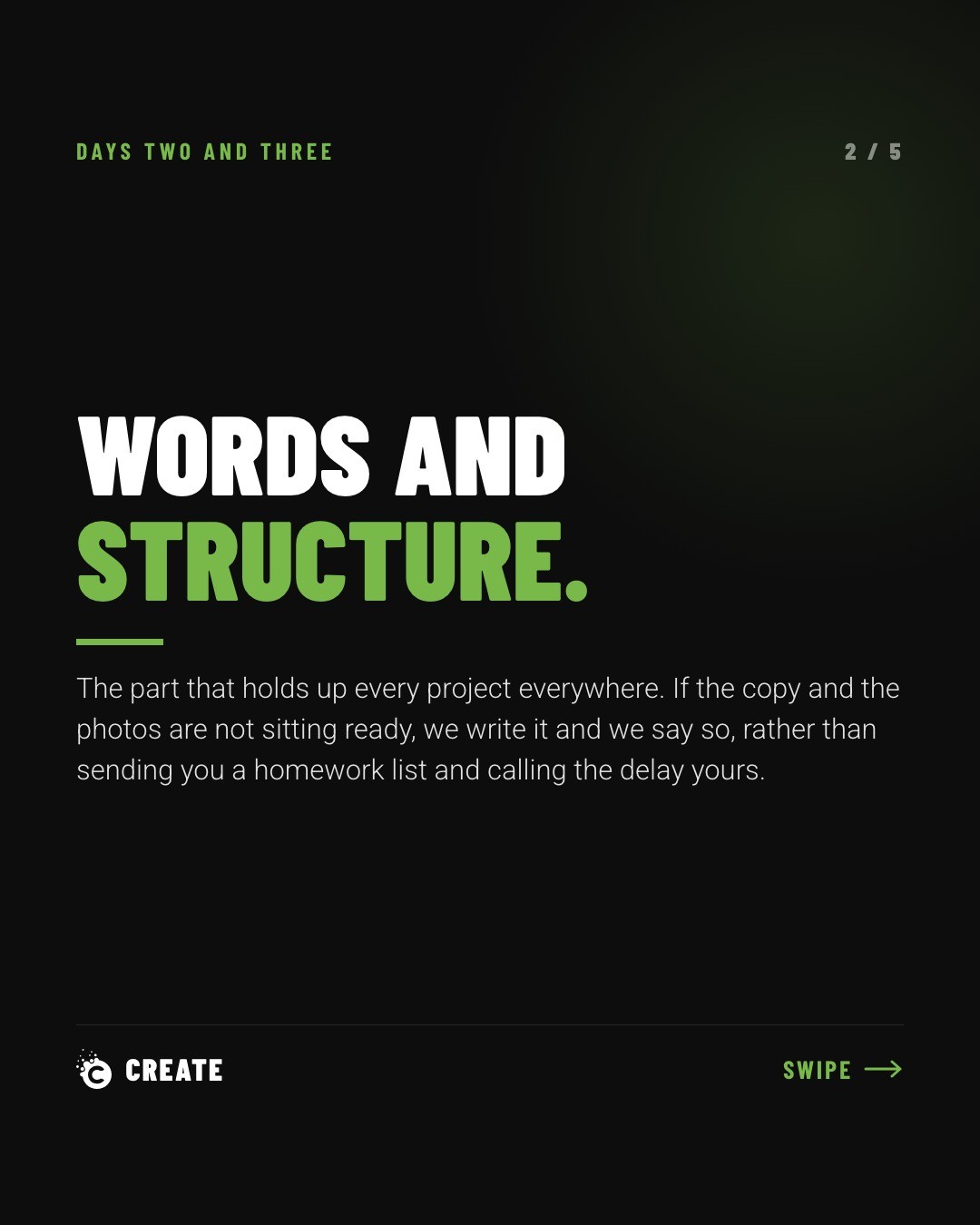
Words and Structure Before Anything Else
Days two and three are spent on copy and structure, because that is what holds up almost every web project we have seen in 25 years. Clients come to us with half-written pages, no photography, and a vague sense that someone else will sort it out later.
So we write it. If the copy is not ready, we draft it. If the photography is missing, we source or shoot it. We do not send over a homework list and then blame the client for a delay that our process created. The structure gets agreed, the words get written, and the project keeps moving.
Built, Then Tested Properly
Days four and five are build days, followed immediately by testing on an actual phone, on mobile data, using one thumb, because that is how most people will genuinely experience the finished site. Forms get sent and checked that they arrive. Page speed gets measured, not assumed from a dashboard. Old URLs get redirected to new pages so nobody lands on a 404 from an old Google result or a saved bookmark.
This is the stage people skip when they are in a hurry, and it is the stage that causes the most embarrassing problems after launch: a contact form that silently fails, a site that loads in nine seconds on 4G, a redirect nobody set up. We test properly because the alternative is finding out from a customer.
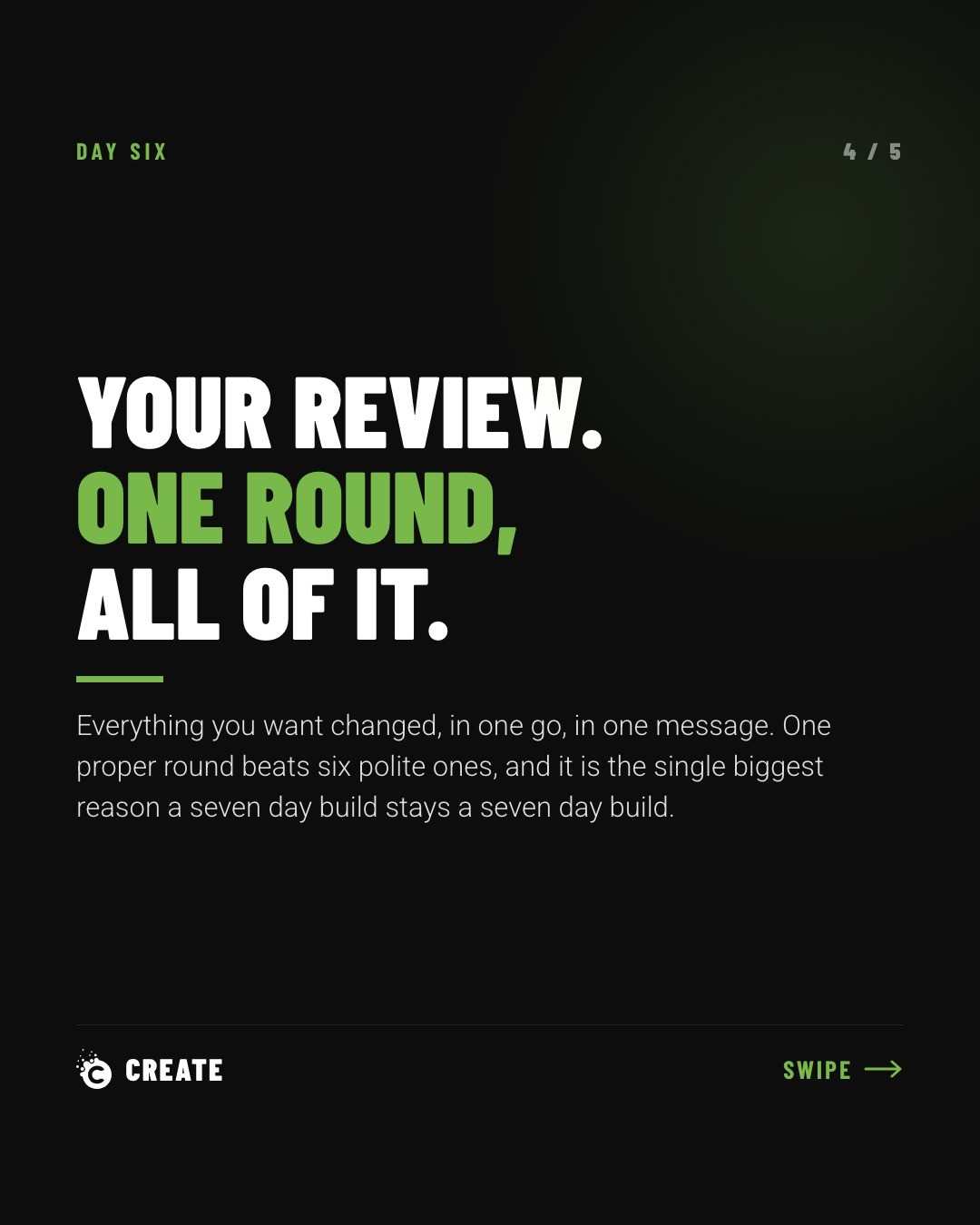
One Review, One Round, One Message
Day six is the client's turn. Everything that needs changing goes into one review, in one message. Not a slow back-and-forth over email spread across a fortnight, but a single, focused round of feedback that we action before launch.
This only works because the first five days were done properly. If the brief was clear on day one and the copy was nailed down on days two and three, there should not be much left to question by day six.
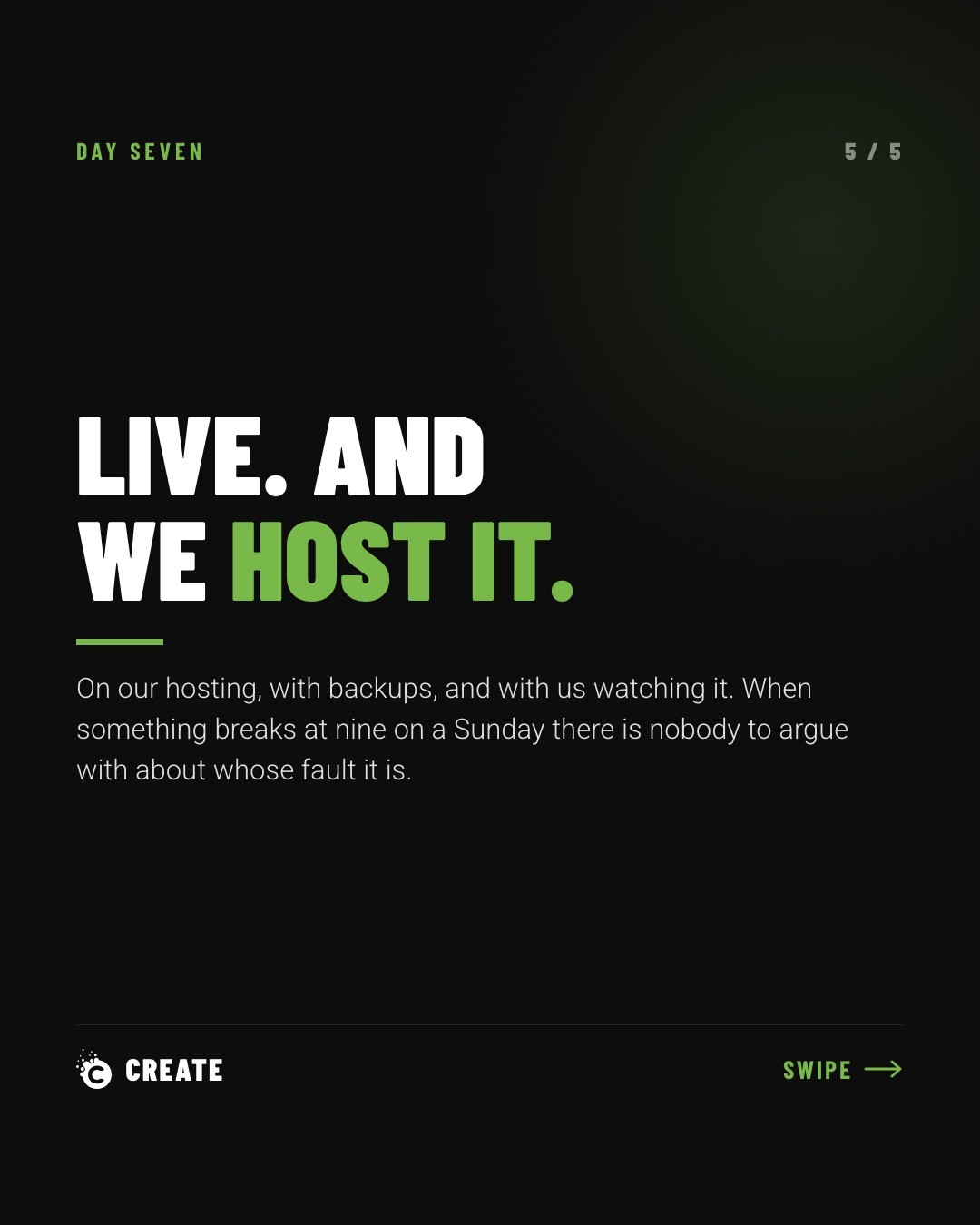
Day Seven: Live, Hosted, Watched
On day seven the site goes live, on our hosting, with backups in place, and with us keeping an eye on it. Not launched and forgotten. Launched and watched, because the first few days after any site goes live are when problems tend to surface, if they are going to surface at all.
What This Process Is Not For
We are upfront about the limits of this. Seven days works for the kind of focused, decisive project that most small and medium businesses actually need: a clear site, built properly, live fast. It does not work for a four-thousand-product online shop, a two-hundred-page migration, or a brand that has not actually been decided on yet. Those are real projects, with real timelines, and we will say so rather than force them into a week they cannot survive.
If a seven-day build sounds like the right fit, or the project is bigger than that and needs a proper timeline instead, the best next step is a conversation. Book a call and we will tell you honestly which one applies.