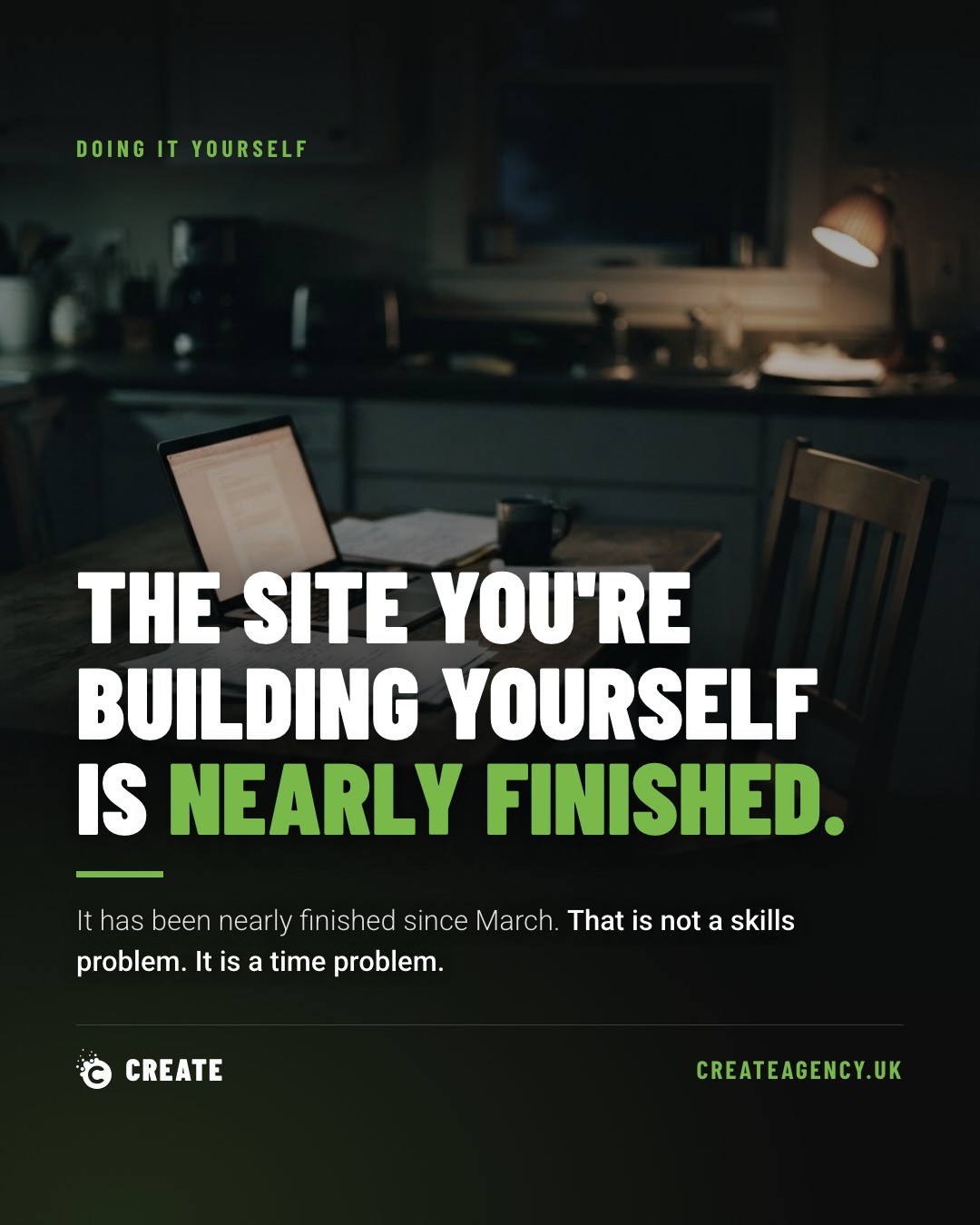
There is a particular kind of website we see constantly. The homepage looks fine. The logo is in the right place. And then, two clicks in, it falls apart: a services page that is still a placeholder, a contact form nobody has tested since the DNS changed, a gallery full of a van the business sold eighteen months ago.
Nobody who builds their own site is bad at it. They are busy. It starts on a free weekend with good intentions and a builder account, and the homepage gets roughed out looking genuinely not bad. Then a job comes in, then another, and the site sits at nearly finished for the best part of a year. We have lost count of the business owners who have told us their website has been "almost ready" since March.
The Unfinished Half Is Always the Same Half
It is never random which bits get left. The pages that need actual writing, service descriptions, pricing, the paragraph explaining what makes the business different, are the ones that stall. Writing that copy takes thought, and thought needs quiet time, which a working tradesperson, consultant or small retailer rarely has to spare.
So the site ends up with page titles still reading Home, Page 2 and Untitled, because renaming a tab felt like a job for later. Prices that changed in spring are still the prices from last year. The photos are the ones taken in year one, including the old van, the old signage, the old shopfront. None of this is difficult work. All of it needs an uninterrupted afternoon that never quite turns up, because running the business always wins against maintaining the website that is meant to support it.
The Problems Nobody Can See Are the Ones That Cost the Most
The visible gaps are embarrassing. The invisible ones are expensive. Redirects from an old domain or an old page structure, left unset, quietly bleed search ranking and send potential customers to 404 pages instead of enquiry forms. Load speed on mobile data, untested since launch, can be the difference between someone waiting three seconds and someone leaving.
Increasingly, there is a newer problem sitting alongside the old ones: whether an AI assistant can actually read a site well enough to recommend the business when someone asks for a recommendation nearby. Thin, unstructured content and missing service detail do not just hurt traditional search rankings, they make a business invisible to the tools more people are starting to ask first.
Then there are backups, security updates and basic technical housekeeping, none of which show up on screen, so none of it gets missed until the site goes down, gets compromised, or simply stops appearing in results the business used to rank for. None of these problems announce themselves in advance. They surface as a slow decline in enquiries that is hard to trace back to a cause.
The Real Comparison Isn't Agency Cost Versus Free
The instinct is to weigh what an agency costs against the cost of a DIY site, which looks like nothing because the builder subscription is cheap and the time already spent feels sunk either way. That is the wrong comparison.
The honest one is what a finished, properly built site costs against a site that has been almost ready since March, quietly costing enquiries every month it stays unfinished. Eleven months of a half-built services page is eleven months of visitors leaving without the information they came for. Eleven months of untested forms is eleven months of enquiries that may never have arrived. That is the real price of free, and it rarely gets totted up because nobody keeps a running total of the customer who didn't bother getting in touch.
Finishing It Properly Doesn't Need to Mean Starting Again
Most of what is wrong with a stalled DIY site is fixable without a rebuild from scratch. Often it is a case of finishing the copy, sorting the structure, fixing what is broken under the bonnet, and making sure the site actually works the way a working business needs it to.
We have spent 25 years building and rescuing websites for businesses who got most of the way there themselves and then ran out of road, which is a position we understand completely, because it happens to almost everyone who tries. If a site has been sitting at nearly finished for longer than feels comfortable to admit, it might be worth a conversation about what is actually needed to close the gap. Book a call and we will tell you straight.