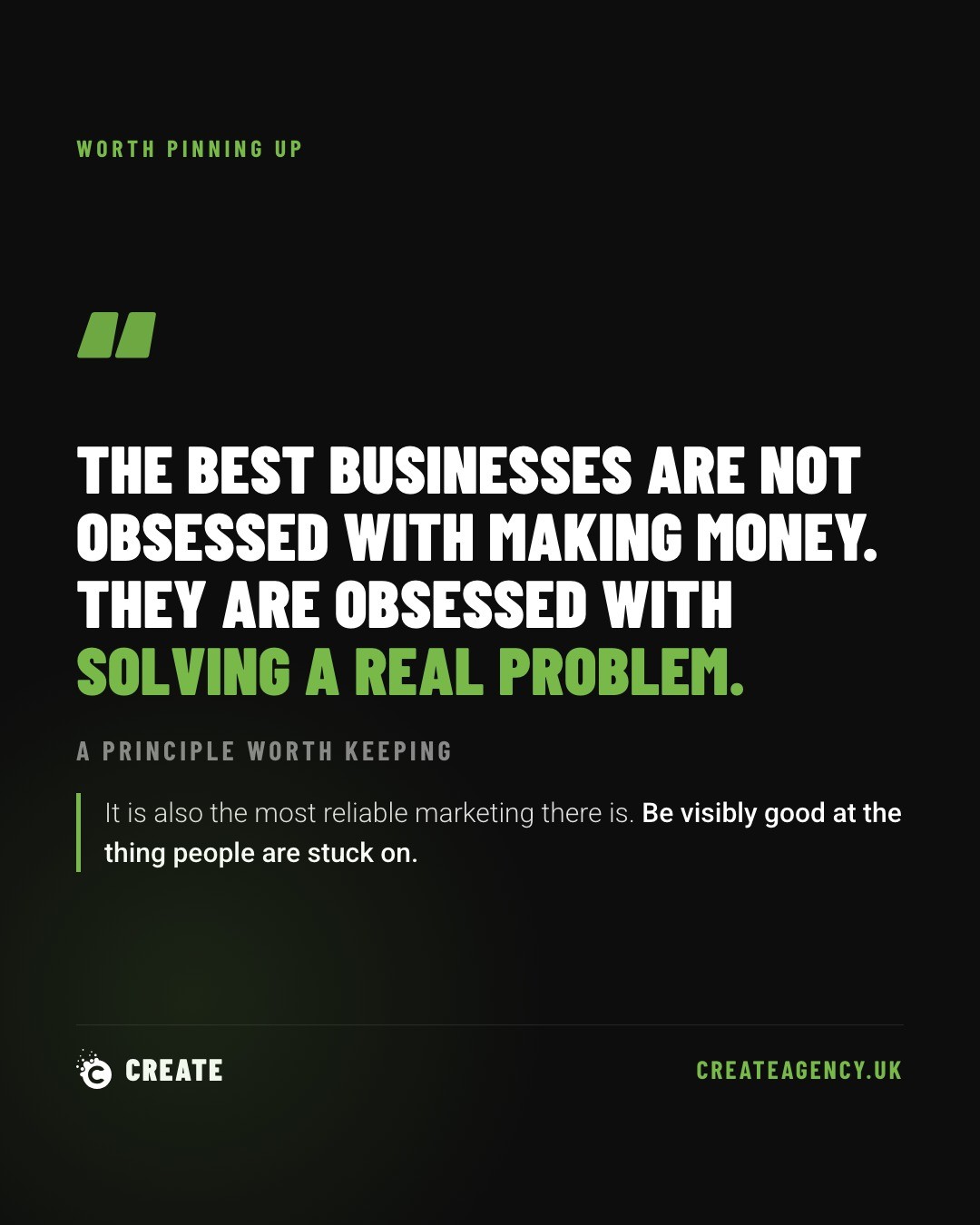
The businesses that last tend not to be the ones most focused on the money. They're the ones most focused on a problem somebody genuinely has. We've watched this play out across 500+ projects over 25 years, and the pattern holds regardless of sector.
This isn't a sentiment. It's the most reliable form of marketing there is. Be visibly good at the thing people are stuck on, and a proportion of them will come to find you rather than needing to be chased, retargeted, or talked round.
Answer The Awkward Question Before Anyone Has To Ask It
Most websites still make people ring up to find out the answer to something simple. What does it cost. How long does it take. What happens if it goes wrong. Hiding that information behind a phone call or a contact form isn't protecting the sale, it's adding friction that sends people elsewhere.
We see this constantly in web development briefs. A client wants more enquiries, but their site buries the one answer every visitor actually needs. Put it on the page. Let the person self-qualify before they ever speak to a salesperson.
Publish The Price When Everyone Else Says Contact Us
"Contact us for pricing" has become shorthand for "we're not confident you'll like the number". Customers read it that way too. It's one of the fastest ways to lose someone who was otherwise ready to buy.
Publishing a price, or even a sensible range, does two things. It filters out people who were never going to be a fit, saving everyone's time. And it arrives in front of people who are already half convinced, because the uncertainty has been removed before the conversation starts.
Explain What Usually Goes Wrong, Even To People Who'll Never Buy
This is the part that feels counterintuitive. Explaining the common mistakes in your industry, including ones a visitor could make without you, looks like giving away free consultancy. In practice, it does the opposite.
It demonstrates competence in public, to an audience that includes people who aren't ready yet, people who will never buy, and people who are quietly comparing three agencies before picking one. The third group is the one that matters, and they're reading everything.
Why This Filters Rather Than Dilutes Your Pipeline
There's a fear that being this open costs business: that publishing prices scares off people who'd have paid more, or that explaining pitfalls hands ammunition to competitors. We'd argue the opposite happens more often.
People who were never going to convert stop wasting your time at enquiry stage instead of three meetings in. People who were serious arrive already trusting your judgement, because you demonstrated it before asking for anything. The sales conversation gets shorter, not harder, because most of the convincing has already happened on the page.
This is true whether the business is a web development agency in Devon, a tradesperson in Tiverton, or a national retailer. The mechanism doesn't change with scale. Visible competence, offered without a paywall around it, does more selling than most advertising spend.
Solve The Problem In Public
The common thread across all of this is simple: stop treating useful information as a reward for becoming a customer. Treat it as the thing that makes someone want to become one.
It requires a bit of nerve, because it means publishing things that feel like they should be behind a sales call. But the businesses that do it consistently tend to spend less time chasing and more time fielding enquiries from people who already trust them.
If a website, a pricing page, or a content strategy is currently making people work harder than they should to find basic answers, that's usually the first thing worth fixing. We help businesses build sites and campaigns that do the explaining before the selling starts; if that's useful, book a call and we'll talk through where to begin.