Most businesses don't come to us saying "we need a digital strategy". They come to us with something that has been quietly annoying them for the better part of two years. A website that hasn't been touched since 2019. A booking process that runs across three spreadsheets, a prayer, and someone's personal inbox. A brand that made sense once but no longer reflects what the business actually does.
These problems share something in common: they all look like minor inconveniences until you add up what they cost. A slow, outdated site leaking organic traffic costs real money every month. A booking system that frustrates customers costs conversions. A brand that doesn't land properly costs trust before you've even had the conversation.
That's the work we actually do. Not just the brief that gets written down, but the one that surfaces once we start looking properly.
The Website Nobody Got Round to Updating
A site last updated in 2019 isn't just dated aesthetically. It's likely running on an old framework, possibly missing mobile optimisation, almost certainly carrying page speed penalties that Google has been quietly punishing for years. The content no longer reflects current services, pricing, or team. And it's the first thing a new customer sees.
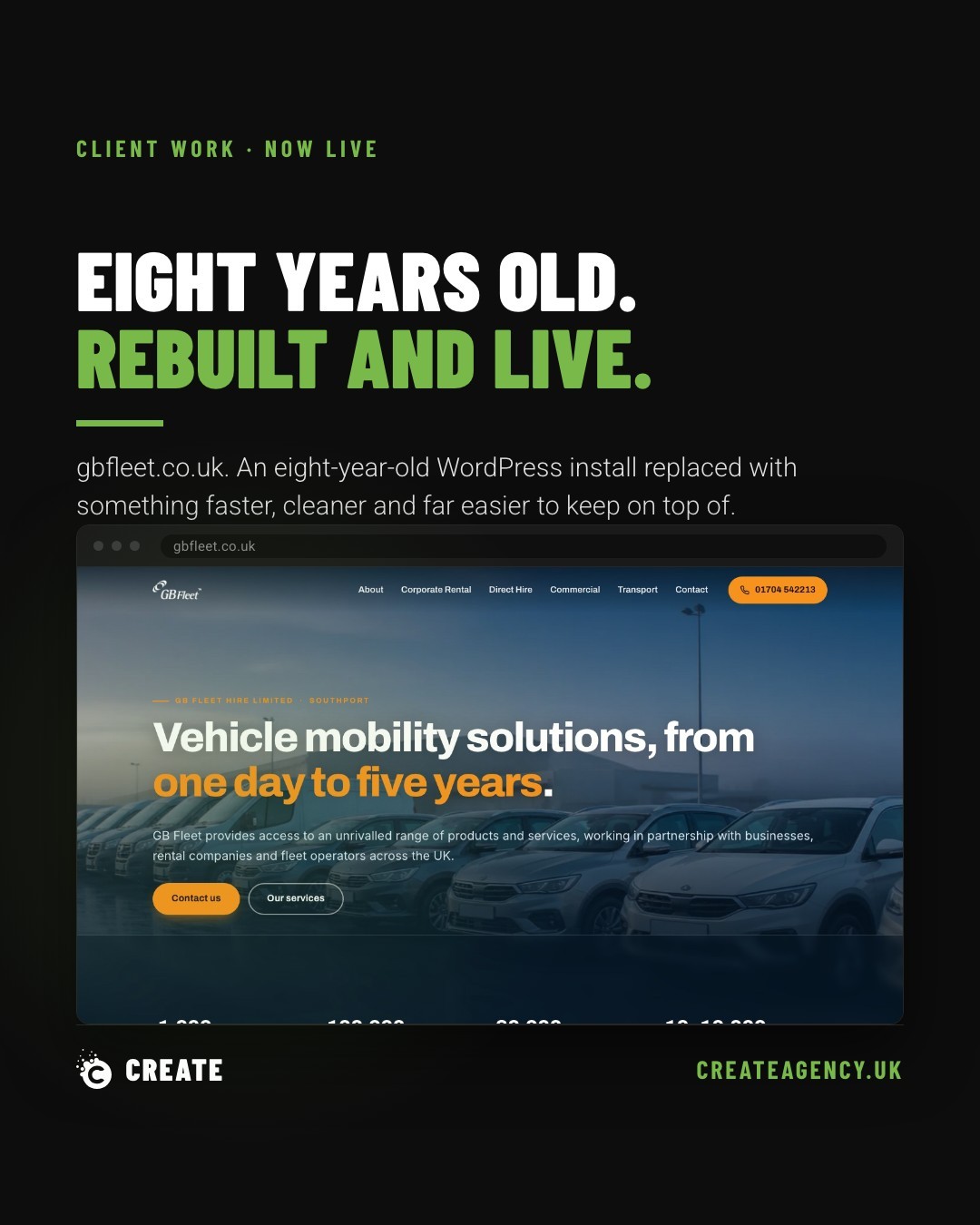
We've rebuilt sites where the client assumed the traffic drop was seasonal. It wasn't. It was a slow bleed from accumulated technical debt that nobody had flagged because nobody had looked. Fixing it properly means a rebuild, not a refresh, and it means starting with a proper audit rather than a blank canvas.
A Booking System Held Together with Hope
Spreadsheets are not a booking system. They're a placeholder that became permanent because there was never quite enough time to replace them. We've seen businesses processing hundreds of appointments a month through tools that were never designed for the job, with no automated reminders, no integration with their calendar or CRM, and no way to report on capacity or revenue.
The solution is rarely glamorous. It's mapping the actual workflow, choosing the right platform for the business type, and building something that staff will actually use. The payoff is immediate: fewer no-shows, less admin, and a customer experience that doesn't feel like it belongs to a different decade.
When the Brand No Longer Fits the Business
Brands drift. A logo designed when the company had four staff and one service doesn't necessarily scale to a team of thirty across two markets. The visual identity starts to create friction rather than confidence, and the messaging hasn't kept pace with what the business has actually become.
This isn't about a cosmetic redesign. It's about getting the positioning right first: who the business is for now, what it stands for, how it wants to be perceived. The design work follows from that. Done properly, a rebrand stops being an expense and starts being an asset that earns its keep across every customer touchpoint.
The SEO Gap That Costs Five Figures a Year
Organic search is one of those channels where the losses are invisible until someone runs the numbers. A business ranking on page two instead of page one for its core terms isn't just losing clicks; it's paying the difference in paid media or simply forgoing revenue that a competitor is picking up instead.
We've audited sites where the technical issues were straightforward, the content gaps were addressable, and the potential recovery in organic traffic was significant. The frustrating part is always that these situations are fixable. They just require someone to actually look at the data, diagnose the problem, and do the work.
What a Proper Digital Partnership Looks Like
The value of working with an agency over the long term isn't the individual deliverable. It's the ongoing attention. Someone who notices the crawl errors before they compound. Someone who questions why the conversion rate dropped in March. Someone who connects the dots between a rebrand, a site migration, and an SEO impact that was entirely predictable but only if you were paying attention.
We've been doing this since 2001 across sectors from hospitality to professional services to e-commerce. The businesses that get the most from the relationship are the ones that treat it as a partnership rather than a project queue.
If there's something that's been sitting on the back burner for longer than it should, it's worth having a proper conversation about it. You can book a call or get in touch directly at our start page, and we'll take a look at what's actually going on.